A mobility scooter for farmers market visits needs to handle more than simply getting from the parking lot to a vendor. Crowded pathways, uneven pavement, grass, gravel, tight spaces, frequent stops, changing weather, and bags of produce can all affect the experience. The right scooter should make the outing easier without becoming difficult to maneuver or transport.
Key Takeaways
- Farmers markets can have more unpredictable surfaces and layouts than supermarkets.
- Maneuverability and stability often matter more than maximum speed.
- A compact scooter can make crowded vendor areas easier to navigate.
- Ground clearance and suitable tires are useful when pavement changes to grass or gravel.
- Storage or carrying options matter when buying produce and other goods.
- Comfort becomes increasingly important during longer market visits.
- Before leaving home, check the market layout, parking situation, weather, and expected crowd level.
The Morning Started With a Simple Question: How Much Walking Would There Be?
I planned to visit the Saturday farmers market with my mobility scooter. It sounded like a straightforward outing: drive to the market, shop for vegetables, buy some bread, have a coffee, and return home.
The part I had underestimated was how much movement would be involved.
A farmers market is not arranged like a supermarket. There may be several rows of temporary stalls, people stopping unexpectedly, narrow gaps between tables, and sections where the pavement changes to grass or gravel.
So before leaving, I checked the battery, cleared the scooter’s storage area, and thought about what I planned to buy.
That small preparation made the rest of the trip easier.
Getting to the Market Was Easy. Parking Was the First Challenge.
The market was busy when I arrived.
Fortunately, I found a parking space reasonably close to the entrance. If I had needed to park several rows farther away, the scooter would have been even more useful—but I would also have needed to think about where I could safely unload it.
For a portable mobility scooter, weight matters here.
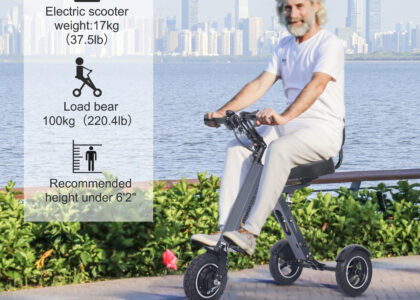
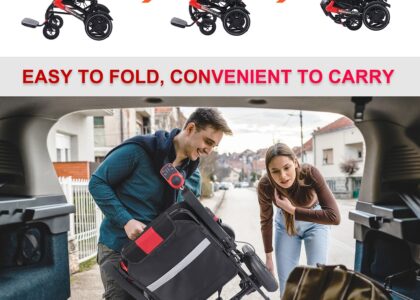
A scooter that is easy for one person to lift, fold, or place into a vehicle can make spontaneous shopping trips much simpler. A heavier model may offer other advantages, but loading it can become a problem before the outing even begins.
After unloading, I checked that the scooter was fully ready before moving into the crowd.
What Happened When I Entered the Market?
The first few minutes were mostly about adjusting my speed.
People were walking in every direction. Some shoppers stopped directly in front of vendor tables. Children moved unpredictably between adults. Other customers carried large bags that extended into the pathway.
This was where maneuverability mattered more than speed.
I rarely needed to travel quickly. I needed to move slowly, stop smoothly, make small turns, and avoid bumping into displays or pedestrians.
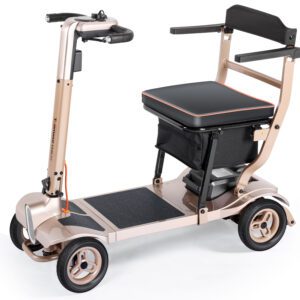
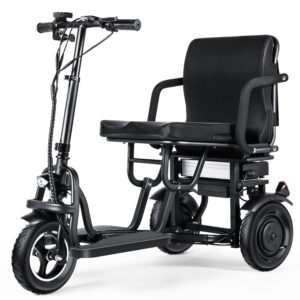
A compact mobility scooter can be useful in this environment because its smaller footprint may make tight turns and narrow pathways easier.
However, compact does not automatically mean suitable. Stability, steering response, seat comfort, and turning radius still matter.
The Narrow Spaces Between Stalls Were the Real Test
At the first vegetable stall, I stopped to look at tomatoes and peppers.
There was enough room to approach the table, but not enough to make a wide turn.
I had to position the scooter carefully, stop, make my purchase, and move away without blocking the people behind me.
This happened repeatedly.
At a supermarket, aisles are generally designed around predictable vehicle and shopping-cart movement. At a farmers market, the available space can change from one stall to the next.
For that reason, a mobility scooter for outdoor markets should be easy to control at low speeds and should have a turning radius suitable for confined areas.
Then the Pavement Changed
Halfway through the market, the paved walkway ended.
The next section was partly grass and partly compacted gravel.
I slowed down.
This was a good reminder that an outdoor mobility scooter does not necessarily need to be an off-road machine, but it should be appropriate for the surfaces the rider actually expects to encounter.
A scooter for uneven surfaces should provide a stable ride and enough ground clearance for minor changes in terrain.
Tire design also matters. Small wheels can feel very different from larger tires when crossing rougher ground.
I avoided deep holes, soft patches, and anything that looked unstable. A mobility scooter is not a substitute for assessing the surface ahead.
What If You Are Carrying Several Bags?
This became important later in the morning.
I bought potatoes, apples, vegetables, bread, and a few other items. Suddenly, the scooter’s storage capacity mattered much more than it had when I left home.
I did not want bags hanging from the handlebars or positioned where they could interfere with steering.
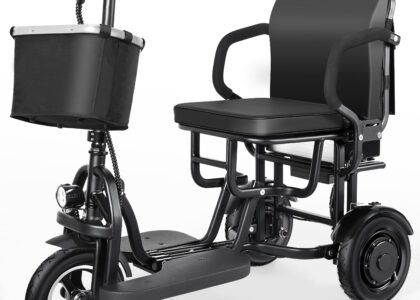
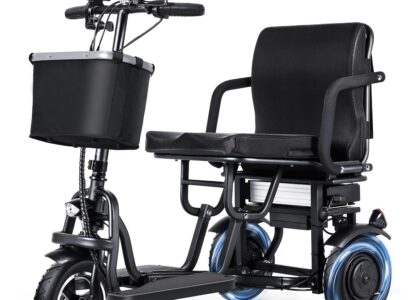
A scooter with a useful basket, storage compartment, or another secure carrying solution can make shopping considerably easier.
There is also a practical limit.
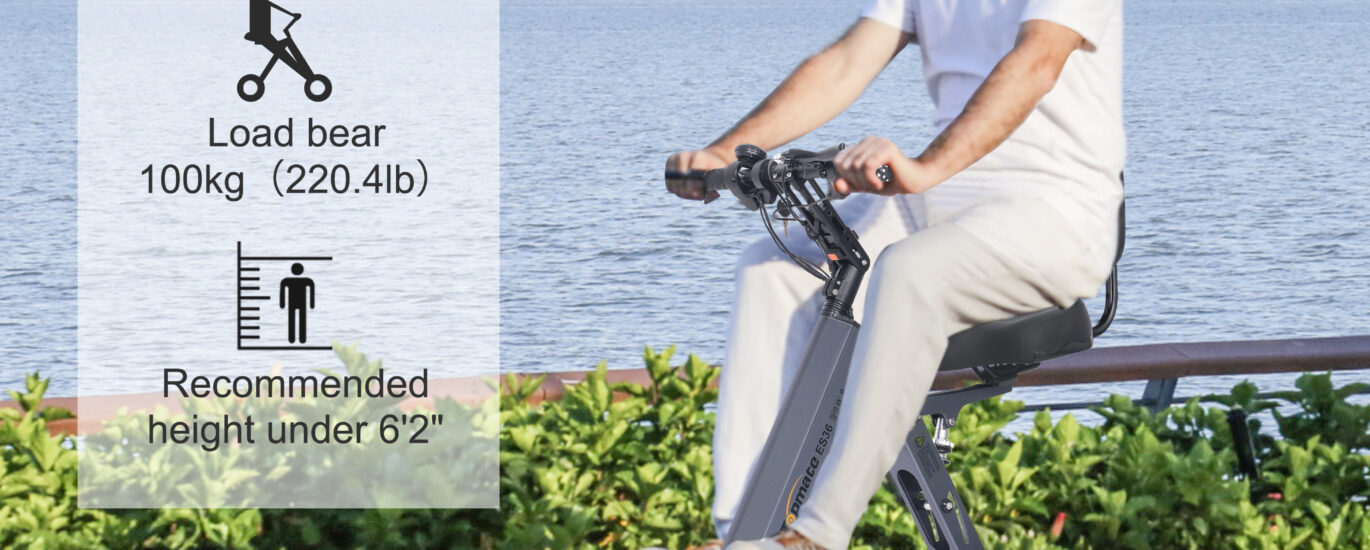
If you regularly buy large quantities of produce, think about how much you can safely carry and how the additional weight affects the scooter. The mobility scooter’s stated weight capacity is not simply a suggestion for the rider—it also needs to account for carried items and accessories.
Four Farmers Market Situations Can Feel Completely Different
| Farmers market situation | What matters most |
|---|---|
| Small neighborhood market | Compact size, easy turning, simple storage |
| Large crowded weekend market | Maneuverability, stability, low-speed control |
| Market partly on grass | Ground clearance, tire design, stability |
| Buying several bags of produce | Storage, weight capacity, secure carrying |
| Long distance from parking | Range, comfort, portability, reliable battery |
The same scooter may be excellent for one market and less suitable for another.
Scenario 1: A Small Neighborhood Market
At a small market with paved paths and fewer vendors, I would prioritize a compact mobility scooter with a tight turning radius.
There is little reason to choose a larger scooter if the environment does not require it.
Scenario 2: A Large Weekend Market
A crowded market changes the priorities.
Here, predictable steering, stability, and easy low-speed control become particularly important. A scooter that feels comfortable on an open sidewalk may feel cumbersome between crowded stalls.
Scenario 3: A Market on Grass
If the market regularly uses a park or field, I would pay closer attention to ground clearance, tires, stability, and the manufacturer’s stated outdoor capabilities.
Grass can be firm and easy to cross—or soft and difficult. Weather can change the surface considerably.
Scenario 4: Buying Several Bags of Produce
For a large shopping trip, storage becomes part of the scooter decision.
I would want a secure place for purchases rather than relying on improvised bags around the tiller.
Scenario 5: A Long Walk From Parking
When the parking area is far away, range and comfort become more important.
A market visit may involve riding to the entrance, spending an hour or more shopping, taking breaks, and riding back to the vehicle.
A battery that is sufficient for a short local trip may not provide the same confidence for a longer outing.
The Break Was More Important Than I Expected
After several rows of stalls, I stopped for coffee.
This was not because the scooter had stopped working. I simply needed a break from concentrating on traffic, choosing products, and navigating around people.
Seat comfort becomes surprisingly important during longer outings.
If a scooter is uncomfortable after 20 or 30 minutes, the problem may become more noticeable during a two-hour market visit.
For frequent farmers market trips, I would consider seat support, riding position, tiller ergonomics, and how easily I can get on and off the scooter.
If I Were Choosing a Scooter for Farmers Markets
I would rank the features like this:
- Maneuverability – Can I turn easily around people and stalls?
- Stability – Does it feel secure when surfaces or conditions change?
- Ground clearance – Can it handle minor surface changes without scraping?
- Tires – Are they appropriate for the pavement, grass, or gravel I expect?
- Comfort – Can I comfortably ride for the entire visit?
- Portability – Can I transport it without excessive effort?
- Storage – Can I safely carry the purchases I normally make?
- Range – Is there enough battery capacity for the complete outing?
- Outdoor capability – Is the scooter designed for the surfaces I will actually use?
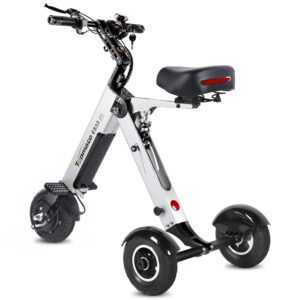
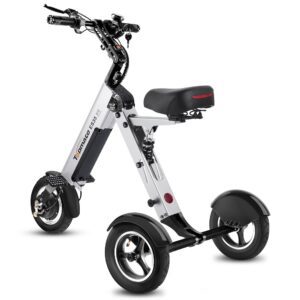
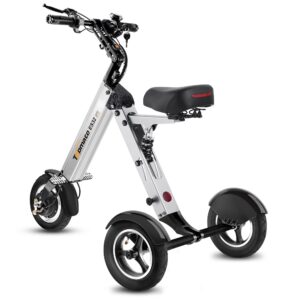
For example, a compact folding model such as the TopMate ES15 may make sense when portability and maneuverability are priorities. A model such as the TopMate ES35 can be considered when the rider wants a different balance of portability, comfort, and everyday outdoor use. The right choice depends on the market environment and the rider’s transportation needs rather than simply choosing the largest or fastest scooter.
Common Mistakes to Avoid
Assuming Every Farmers Market Has Smooth Pavement
Check whether the market uses sidewalks, parking lots, grass, gravel, or temporary paths.
Focusing Only on Weight
A lightweight scooter is convenient, but it still needs to provide appropriate stability and outdoor performance.
Forgetting About Purchases
Plan where vegetables, bags, and other goods will go before the storage area becomes overloaded.
Ignoring the Weather
Heat, rain, wet grass, and slippery surfaces can change the experience considerably.
Choosing Based Only on Maximum Range
Range is useful, but a scooter also needs to be comfortable and manageable during frequent stopping and starting.
What I Wish I Had Planned Before the Trip
The biggest lesson was that the market itself was not difficult because it was far away. It was difficult because the environment kept changing.
One minute I was riding on pavement. The next I was approaching a narrow stall, avoiding a pedestrian, crossing a rough patch, or stopping to buy something.
That is why choosing a mobility scooter for farmers market trips is really about matching the scooter to the environment.
For occasional visits to a small paved market, portability and maneuverability may be the priorities. For larger outdoor markets, stability, tires, ground clearance, comfort, storage, and range can become more important.
The best scooter is not necessarily the fastest one. It is the one that lets you shop at your own pace, handle the surfaces in front of you, carry what you reasonably need, and return home without making the outing harder than it needs to be.
FAQ
What is the best mobility scooter for a farmers market?
The best option depends on the market’s surfaces, crowd size, parking distance, and how much shopping you expect to carry. Maneuverability, stability, comfort, storage, portability, and outdoor capability are usually more useful considerations than maximum speed.
Can a mobility scooter be used on grass at a farmers market?
Some mobility scooters can handle firm grass, but performance depends on the scooter’s tires, ground clearance, weight, and design. Avoid soft, muddy, steep, or heavily uneven areas unless the manufacturer specifically indicates that the scooter is suitable for them.
Do I need a large mobility scooter for outdoor markets?
Not necessarily. A compact mobility scooter can be easier to maneuver around crowded stalls and narrow pathways. However, riders who regularly encounter rough surfaces may need to balance compactness with stability, tire design, and ground clearance.
How can I carry groceries on a mobility scooter?
Use the scooter’s designated basket, storage compartment, or another secure accessory designed for carrying items. Keep purchases balanced and within the scooter’s weight limits, and avoid placing bags where they could interfere with steering or controls.