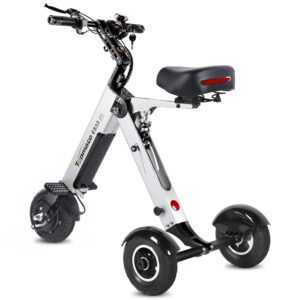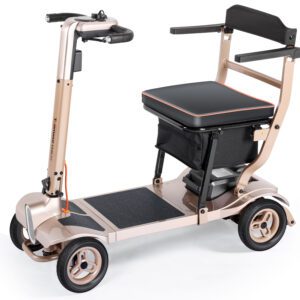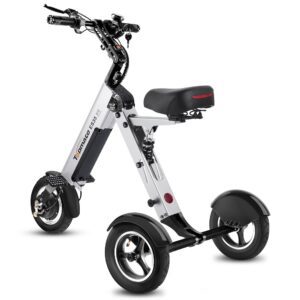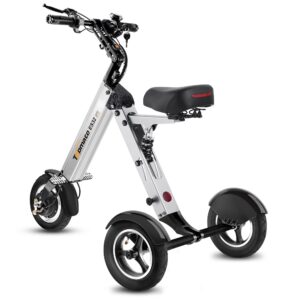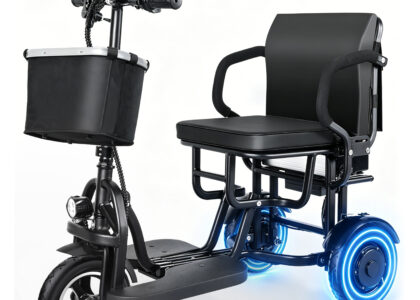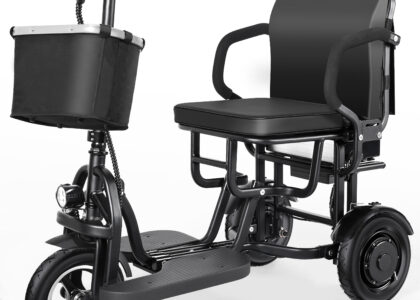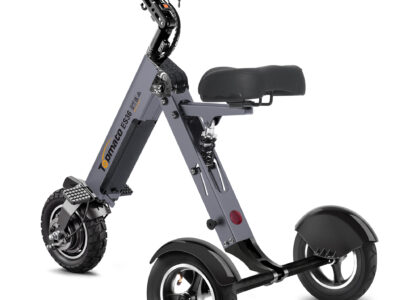
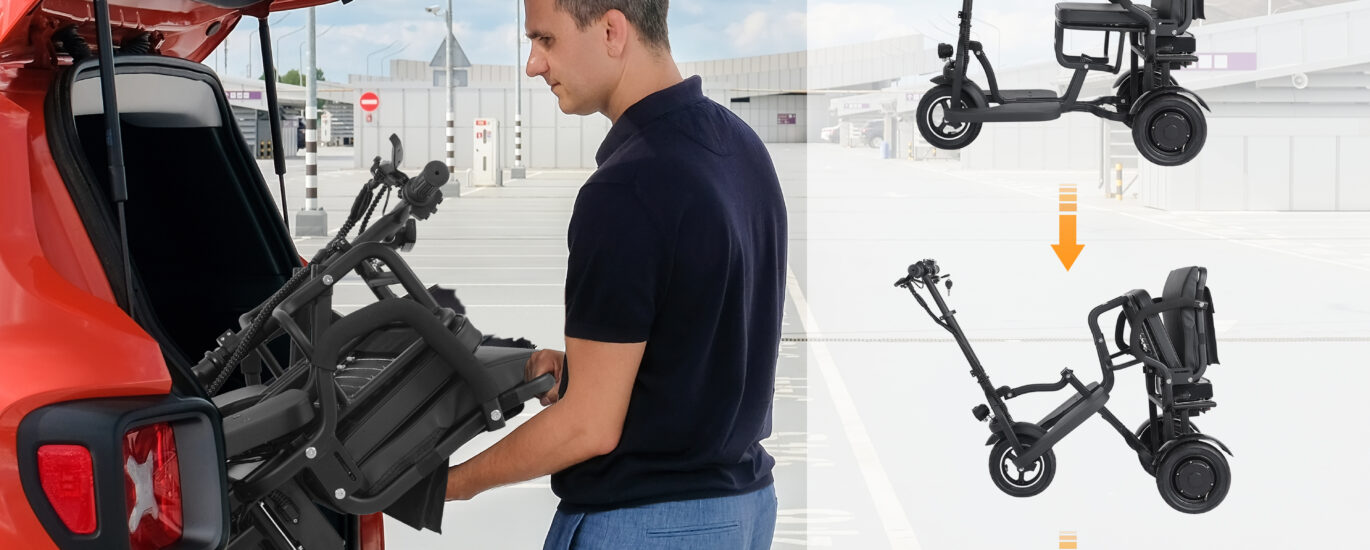
A senior with a compact hatchback or sedan may want to carry a mobility scooter for grocery shopping, medical appointments, or weekend trips. The important question is not simply whether the scooter folds. It is whether the folded scooter can pass through the vehicle opening, fit inside the available cargo space, and be loaded safely.
Yes, a folding mobility scooter can fit in many small cars, but compatibility depends on the scooter’s folded dimensions, the car’s cargo opening, available floor space, and the scooter’s weight. Before buying, measure both the vehicle and scooter and consider how the scooter will actually be loaded.
Can a Folding Mobility Scooter Fit in a Small Car?
A folding mobility scooter can fit in a small car when its folded dimensions are suitable for the vehicle’s cargo area and the person loading it can handle its weight safely.
Four measurements and practical considerations matter most:
- Folded scooter dimensions: Check length, width, and height after folding.
- Cargo opening: The scooter must fit through the trunk, boot, or hatch opening.
- Cargo-floor space: There must be enough depth and width once the scooter is inside.
- Scooter weight: A scooter may physically fit but still be difficult for one person to lift.
This is why unfolded scooter dimensions can be misleading. A scooter may look large while in riding position but become considerably more compact when folded. At the same time, a compact folded scooter can remain difficult to load if the car opening is narrow or low.
The key distinction is “Will it fit?” versus “Can I load it?” Both questions need to have a satisfactory answer.
The Measurements You Should Check Before Buying
Before purchasing a mobility scooter for a small car, measure the vehicle’s actual usable space. Do not rely only on general descriptions such as “fits in most hatchbacks.”
Start with the cargo opening. Measure its narrowest usable width and height. Then measure the cargo floor from the opening toward the rear seats. Measure the usable width between interior panels or wheel arches.
You should check:
- Folded scooter length
- Folded scooter width
- Folded scooter height
- Cargo opening width
- Cargo opening height
- Cargo-floor depth
- Cargo-floor width
- Height from the ground to the cargo opening
- Clearance around the folded scooter
A scooter can have compact folded dimensions and still be difficult to load if the vehicle opening is too narrow or low.
How do I measure my car for a mobility scooter?
Use a tape measure and record the vehicle’s measurements with the seats positioned as you normally use them. If you plan to fold the rear seats, measure with them folded as well.
Next, compare those measurements with the scooter’s manufacturer-provided folded dimensions.
Do not consider only length and width. Think about the movement required to load the scooter. It may need to be tilted, rotated, or lifted at an angle before it enters the vehicle.
Allow practical clearance rather than planning for a perfect, tight fit. A few extra centimetres can make repeated loading much easier.
Small Car Types and What to Expect
Vehicle design affects loading, although no particular vehicle category guarantees that a scooter will fit.
Compact hatchback
A hatchback can sometimes make scooter transportation easier because its rear opening provides relatively direct access to the cargo area.
The larger rear door can make it easier to position a folded scooter. However, the cargo floor may still be limited in depth, especially when the rear seats remain upright.
If you use the scooter for grocery shopping, check how much space remains for shopping bags after loading it.
Small sedan
A sedan can have sufficient trunk volume but still present a loading problem. The trunk opening may be smaller or differently shaped than the available space inside.
Therefore, when asking “Can a folding mobility scooter fit in a sedan?”, do not look only at the trunk’s total capacity. Measure the opening itself and consider the angle required to insert the scooter.
Small crossover
A small crossover may offer more vertical cargo space, which can help with a folded scooter.
However, a higher cargo floor can also mean a greater lifting height. For someone loading the scooter alone, that extra lift may matter more than having additional interior space.
Very small city car
In a very small city car, folded size and scooter weight become especially important. There may be little room to manoeuvre the scooter, and passengers or luggage can quickly use the remaining cargo space.
For these vehicles, a compact design with manageable weight can make transportation considerably more practical.
What Matters More: Folded Size or Scooter Weight?
Both matter, but they solve different problems.
Folded dimensions tell you whether the scooter can occupy the available space. Weight tells you whether you can safely get it there.
For example, a scooter might fit comfortably inside a trunk but be too heavy for the intended user to lift from the ground to the cargo floor. In that situation, the scooter technically fits but is not a practical transportation solution.
Look beyond the scooter’s total advertised weight. Check whether the battery can be removed and whether doing so makes handling easier.
Other useful transportation features include:
- An easy folding mechanism
- Integrated carrying points
- Stable folded positioning
- Convenient wheel placement
- A manageable loading angle
- A removable battery, where applicable
If you regularly travel alone, ask “Can one person lift a folding mobility scooter?” rather than focusing only on its folded dimensions.
How to Test Whether Your Car Can Carry a Folding Mobility Scooter
A practical pre-purchase test can prevent an inconvenient purchase.
1. Measure the cargo opening.
Record the narrowest usable width and height.
2. Measure the cargo floor.
Check the available depth and width with the seats positioned as they will be during normal journeys.
3. Check the scooter’s folded dimensions.
Use the manufacturer’s measurements rather than estimating from photographs.
4. Compare the measurements with clearance.
Avoid a fit that requires forcing or squeezing the scooter into place.
5. Check the actual lifting weight.
Consider how much weight the person loading the scooter will really handle.
6. Consider the loading angle.
A scooter may need to be tilted or turned to pass through the opening.
7. Check the rear seats.
Determine whether they need to fold and whether that arrangement works for your normal passengers.
8. Consider the battery.
If removable, determine whether removing it makes transportation easier and follow the manufacturer’s instructions.
9. Think about who will load it.
A caregiver or family member may make loading easier, while someone travelling alone needs a scooter that matches their physical ability.
Whenever possible, physically test the scooter in the actual vehicle before purchasing.
Real-Life Loading Scenarios
Senior loading the scooter alone
For a solo user, weight and handling can be more important than having a little extra cargo space. A scooter that requires awkward twisting or a high lift may become tiring when loaded several times each week.
A simple folding mechanism and convenient carrying points can make a meaningful difference.
Caregiver loading the scooter
A second person can make a heavier scooter easier to position and lift. However, assistance cannot solve an opening that is physically too small.
The vehicle still needs adequate cargo dimensions.
Grocery shopping
After asking “Can a mobility scooter fit in a car trunk?”, ask a second question: how much space will remain?
A scooter that occupies almost the entire cargo area may leave little room for groceries. For regular shopping trips, remaining cargo space matters.
Weekend travel
Weekend trips usually involve luggage and additional passengers. A scooter that works for a short local journey may become inconvenient when suitcases are added.
Consider the complete packing arrangement before buying.
Medical appointments
For frequent medical appointments, easy loading and unloading may matter more than maximum driving range. If the scooter enters and leaves the car several times a week, handling convenience becomes part of everyday usability.
When a Folding Mobility Scooter May NOT Be the Right Choice
A folding scooter may not be suitable for a small car when its folded dimensions exceed the cargo opening or available floor space.
It may also be impractical when:
- The scooter is too heavy for the person loading it.
- The trunk or boot opening is too narrow.
- Cargo depth is severely restricted.
- Rear seats must remain available.
- Passengers and luggage leave insufficient space.
- Loading requires unsafe lifting or awkward twisting.
Choosing a smaller scooter is not always enough. The vehicle and the user’s physical ability must be considered together.
What Should You Look for in a Folding Mobility Scooter for a Small Car?
When choosing a mobility scooter for small cars, focus on transportation features rather than simply selecting the smallest model.
Look for:
- Compact folded dimensions
- Manageable overall weight
- Removable battery where appropriate
- Easy folding mechanism
- Integrated carrying points
- Stable folded configuration
- Practical wheel placement
- Easy loading and unloading
- Clearly published manufacturer dimensions
Manufacturer specifications are particularly important. You should be able to verify the scooter’s folded dimensions and actual weight before making a decision.
Relevant TopMate internal content about mobility scooter dimensions, mobility scooter weight, folding mobility scooters, and mobility scooter transportation can also help readers understand these factors in greater detail.
Final Decision
So, can a folding mobility scooter fit in a small car? In many situations, yes. But the correct answer depends on the specific scooter, vehicle, and person doing the loading.
It is likely to work if:
- The folded dimensions fit through the cargo opening.
- The scooter fits the available floor space.
- It can be loaded without unsafe lifting.
- Enough cargo space remains for normal needs.
- The folding and battery systems make transportation practical.
Think twice if:
- The scooter only fits with excessive force or awkward angles.
- The intended user cannot comfortably lift it.
- The cargo opening is smaller than the folded scooter.
- The vehicle has very limited cargo depth.
- Passengers and luggage already consume most of the available space.
Ultimately, don’t buy based on folded dimensions alone. Measure both the scooter and the car, then consider how the scooter will actually be loaded. A good small-car mobility scooter is not simply one that fits inside; it is one that can be loaded, transported, and removed safely and comfortably.
FAQ
Can a folding mobility scooter fit in a small car?
Yes, many folding mobility scooters can fit in small cars, but compatibility depends on the scooter’s folded dimensions, cargo opening, available floor space, and weight. Always measure the car’s trunk or boot opening and compare it with the scooter’s folded length, width, and height before buying.
Can a folding mobility scooter fit in a sedan?
A folding mobility scooter can fit in some sedans, but the trunk opening may be more restrictive than the total trunk space. Measure the opening’s width and height as well as the trunk’s depth. Also consider whether the scooter needs to be tilted or rotated during loading.
Can one person lift a folding mobility scooter into a car?
It depends on the scooter’s weight and the user’s physical ability. A scooter may be compact enough to fit but still too heavy or awkward to lift safely. Features such as a manageable weight, removable battery, folding mechanism, and convenient carrying points can make solo loading easier.
How do I measure my car for a mobility scooter?
Measure the trunk or cargo opening’s width and height, then measure the available cargo-floor depth and width. Also check the height from the ground to the cargo opening. Compare these measurements with the scooter’s folded dimensions and allow enough clearance for the scooter to be loaded without forcing or twisting it.