Quick Answer
Yes, many mobility scooters can be charged using a portable power station, as long as the power station can provide enough continuous AC power for the scooter charger and has enough usable battery capacity for the charging session. The safest method is to plug the manufacturer-approved scooter charger into the power station’s AC outlet rather than connecting the scooter battery directly.
A portable power station can be useful for RV trips, camping, road trips, outdoor events, and other situations where a normal wall outlet is unavailable. However, choosing the right unit requires more than looking at its advertised watt-hour capacity.
How Does a Portable Power Station Charge a Mobility Scooter?
A portable power station stores electrical energy in its internal battery and provides electricity through outlets such as AC, USB, and DC ports.
For most mobility scooters, the AC outlet is the important connection because you can use the scooter’s regular charger.
The setup is simple:
Portable power station → AC outlet → scooter charger → mobility scooter
The power station supplies electricity to the charger, and the charger converts that electricity into the charging current required by the scooter battery.
This is why you generally should not connect the scooter battery directly to a portable power station. The scooter’s charger is designed for the battery’s charging requirements.
Before using a portable power station, check the scooter manual and charger specifications. The manufacturer’s instructions should always take priority over general recommendations.
What Should You Check Before Buying a Power Station?
There are four specifications worth checking before you rely on a portable power station for scooter charging.
| What to check | Why it matters |
|---|---|
| Charger power requirement | Shows how much AC power the charger needs |
| Continuous AC output | Determines whether the power station can run the charger |
| Battery capacity in Wh | Determines how much stored energy is available |
| Manufacturer instructions | Confirms whether the charging arrangement is appropriate |
Do not look only at the power station’s maximum or peak output. A charger operates for an extended period, so the continuous AC output is more relevant.
For example, if your scooter charger requires 100 watts and the power station can continuously supply considerably more than that through its AC outlet, the power station has sufficient inverter capacity on paper.
You also need enough stored energy to keep the charger running for the required period.
Watts vs. Watt-Hours: What’s the Difference?
This is one of the easiest parts of portable charging to misunderstand.
Watts (W) describe power. They help determine whether the power station can operate the scooter charger.
Watt-hours (Wh) describe stored energy. They help determine how long the power station can provide power before it needs to be recharged.
For example, a scooter battery may have a certain Wh capacity, while its charger may draw a much smaller amount of power at any given moment.
That means you cannot simply assume that a scooter with a 300 Wh battery needs a 300 W power station.
You need to consider both:
- How much power the charger requires
- How much energy the power station stores
There are also energy losses as electricity passes through the power station’s inverter and the scooter charger. Therefore, a power station whose advertised capacity exactly matches the scooter battery capacity may not provide enough usable energy for a complete charge.
Leaving some extra capacity is more practical.
Can Different Mobility Scooter Batteries Be Charged This Way?
The charging method can work with different types of mobility scooter batteries, but the important point is that the portable power station normally powers the charger, not the battery itself.
Mobility scooters can use different battery systems, including lithium-ion and various sealed lead-acid designs.
Rather than choosing a portable power station based only on battery chemistry, check whether your scooter’s approved charger can be safely operated from the power station.
Always use the charger recommended by the scooter manufacturer.
Avoid using an incompatible third-party charger simply because its voltage appears to match. Battery charging involves more than matching a single voltage number.
Charging a Mobility Scooter While Camping
Camping is one of the situations where a portable power station can make practical sense.
Consider someone spending a weekend at a campground without an electrical hookup. They may use their mobility scooter throughout the day and return to the campsite in the evening.
Instead of looking for an available outlet, they can connect the scooter’s charger to a suitably sized portable power station.
A typical arrangement might look like this:
Use scooter during the day → return to campsite → connect charger → recharge overnight
Some portable power stations can also be recharged using compatible solar panels. This can help replenish the power station during daylight hours, although the amount of energy generated depends on the solar panel size, sunlight, weather, and charging system.
A small solar panel should not automatically be assumed to replace all the energy consumed by a scooter.
Using a Power Station in an RV
RV travelers may find portable charging useful when electrical hookups are unavailable.
For example, someone dry camping may want to recharge a mobility scooter without depending entirely on campground electricity.
A portable power station can provide a separate source of stored energy for the scooter charger.
It can also be useful when the scooter is being used outside the RV.
However, size and weight matter. A high-capacity power station may provide more energy but can also be difficult to move and store.
An RV traveler should therefore consider both:
- How much energy is needed
- How easy the power station is to transport and store
If the scooter itself is already taking up limited RV storage space, adding a very large power station may not be practical.
What About Road Trips?
Road trips are another situation where backup charging can be useful.
A traveler may spend several hours driving, stop at a tourist attraction, stay overnight at a hotel, and continue the following day. Access to electrical outlets may vary from one stop to another.
A portable power station can provide another charging option when an outlet is not immediately available.
For a multi-day trip, it makes sense to:
- Charge the scooter whenever a reliable outlet is available.
- Keep the power station charged.
- Plan how the power station will be recharged.
- Carry the scooter’s original charger.
- Have another charging option available when possible.
The power station should be viewed as part of the overall charging plan rather than the only source of electricity.
Does Scooter Portability Still Matter?
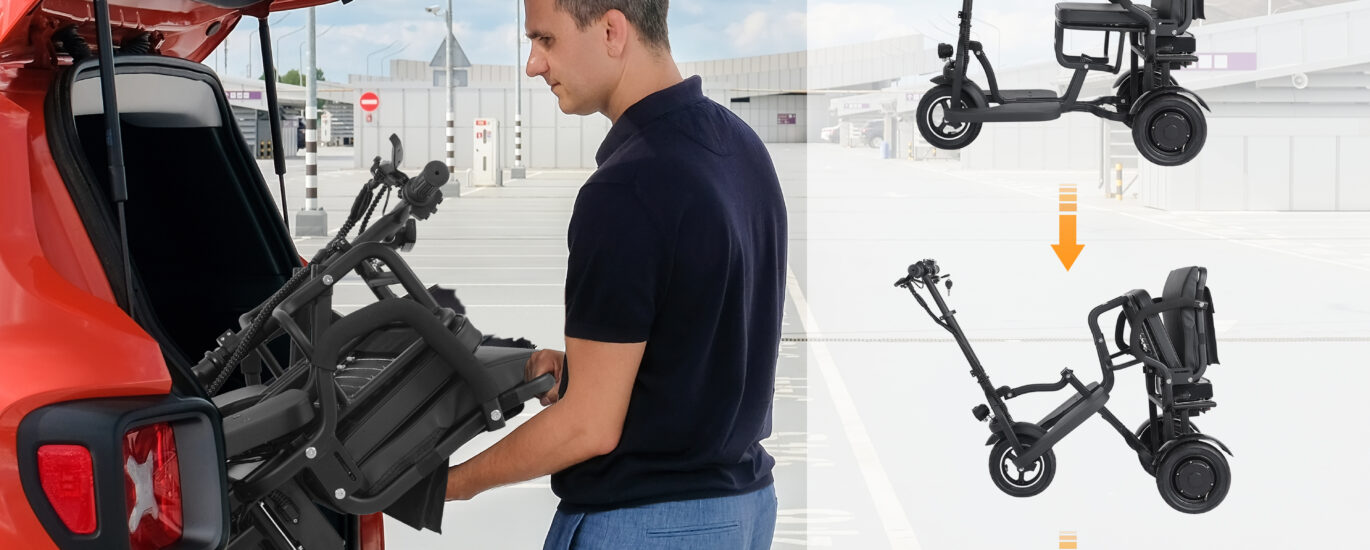
Yes. A portable power station solves a charging problem, but it does not solve transportation or storage problems.
Someone who frequently loads a mobility scooter into a small car or SUV needs to consider the combined weight of:
- The scooter
- Scooter battery
- Charger
- Portable power station
- Other travel equipment
Folded dimensions can matter too.
A person living in an apartment may have limited storage space. In that situation, a compact scooter and a reasonably sized charging setup may be more useful than simply choosing the largest available equipment.
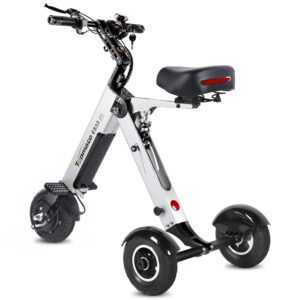
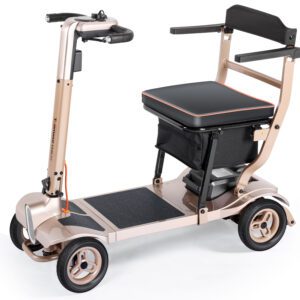
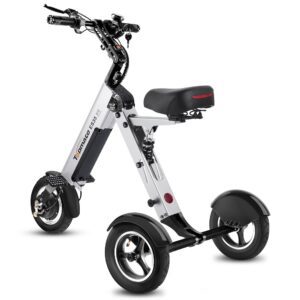
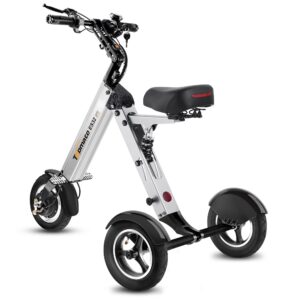
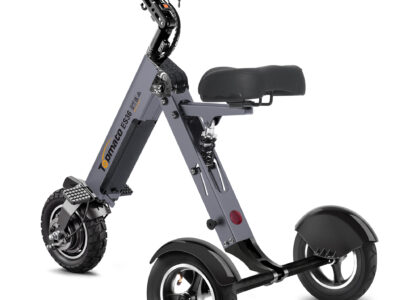
TopMate models have different positioning depending on the type of use:
- ES15: lightweight and portable, with an emphasis on small spaces and frequent transportation.
- ES35: designed around everyday use while balancing portability and outdoor capability.
- ES36: focused more on everyday comfort and stability.
- ES40: travel-focused, with compact folding and transportation in mind.
A portable power station should complement the scooter’s intended use rather than determine which scooter someone buys.
Can You Take a Portable Power Station on an Airplane?
Do not assume that a portable power station can be carried onto an aircraft simply because it is marketed as portable.
Lithium batteries are subject to specific aviation restrictions, and portable power stations can have considerably larger batteries than ordinary consumer electronics.
If you’re flying with a mobility scooter, check the current requirements for:
- The scooter itself
- The scooter’s battery
- Whether the battery is removable
- The battery’s watt-hour rating
- The portable power station
- Carry-on and checked-baggage restrictions
- The specific airline’s policies
Airline requirements can change and can vary between carriers and jurisdictions. Check with the airline and relevant aviation authority before departure.
For U.S. travelers, current FAA PackSafe guidance should be checked before flying with lithium battery equipment.
Is a Portable Power Station Safe for Mobility Scooter Charging?
It can be, provided the equipment is compatible and used according to the manufacturers’ instructions.
Follow these basic precautions:
Use the original or manufacturer-approved charger
The charger should be designed for your particular scooter and battery system.
Check the continuous AC output
Make sure the power station can continuously supply the charger’s required power.
Keep the equipment ventilated
Do not cover the charger or power station while charging. Keep ventilation openings clear.
Keep the setup dry
Do not charge where rain or water can reach the electrical connections.
Check cables before traveling
Inspect plugs, cables, and connectors for visible damage before use.
Avoid extreme heat
Do not leave battery equipment in excessive heat, especially inside a closed vehicle.
Never bypass the charger
Do not connect the portable power station directly to the scooter battery unless the manufacturer specifically provides and approves such a charging method.
Common Mistakes to Avoid
Choosing a power station based only on Wh
Capacity matters, but it is only part of the equation. Check the continuous AC output as well.
Confusing watts with watt-hours
Watts relate to the charger’s power requirement. Watt-hours relate to stored energy.
Forgetting energy losses
The scooter will not necessarily receive every watt-hour advertised by the power station.
Assuming every scooter charger works the same way
Different chargers have different electrical requirements. Check the charger label instead of relying on assumptions.
Forgetting to recharge the power station
A portable power station is only useful as backup if it has been charged before the trip.
Taking one to an airport without checking the rules
A power station may be subject to aviation battery restrictions. Check current airline and aviation requirements before traveling.
Who Is Most Likely to Benefit?
A portable power station may be worth considering if you:
- Frequently travel by RV
- Go camping without electrical hookups
- Take multi-day road trips
- Spend long periods outdoors
- Visit locations where outlets are limited
- Want a backup charging option for emergencies
It may be unnecessary if your scooter is primarily used around the home and you always have easy access to a wall outlet.
The extra equipment also has to be stored and transported, so convenience depends on how you actually use your scooter.
Final Takeaway
A portable power station can be a useful way to charge a mobility scooter away from a normal electrical outlet. The key is choosing a power station that can safely operate the scooter’s charger and has enough usable energy for the charging session.
For camping, RV travel, road trips, and long outdoor days, this setup can provide useful backup power. For someone who mainly charges at home, carrying an additional battery system may not be worth the extra weight and storage requirements.
Before buying one, check the scooter charger’s electrical specifications, the power station’s continuous AC output, its usable capacity, and the manufacturer’s instructions.
FAQ
Can I fully charge a mobility scooter with a portable power station?
Yes, potentially. The power station needs enough usable energy and sufficient continuous AC output to operate the scooter charger for the required charging period.
What size power station do I need for a mobility scooter?
It depends on the scooter battery and charger. Check the battery’s Wh capacity and the charger’s power requirement, then choose a power station with sufficient capacity and continuous AC output.
Can I connect a mobility scooter battery directly to a portable power station?
Generally, no. Use the scooter manufacturer’s approved charger through the power station’s AC outlet unless the manufacturer specifically provides another approved charging method.
Can I take a portable power station on an airplane?
Do not assume so. Portable power stations can be subject to strict lithium-battery restrictions. Check the current airline and aviation authority requirements before traveling.