Quick Answer
A removable battery mobility scooter is usually more convenient when the scooter is stored away from an electrical outlet, such as in an apartment parking area, shared garage, or vehicle. A fixed battery can be simpler when the scooter is always stored near a dedicated charging point. The better option depends less on battery type itself and more on where you store the scooter, how you charge it, and how often you transport it.
What Actually Changes With the Battery Design?
Battery type does not just affect charging. It can change how easy the scooter is to use every day.
With a fixed battery, the battery remains installed in the scooter during normal charging. You bring the scooter to the charger, or position it close enough for the charging cable to reach.
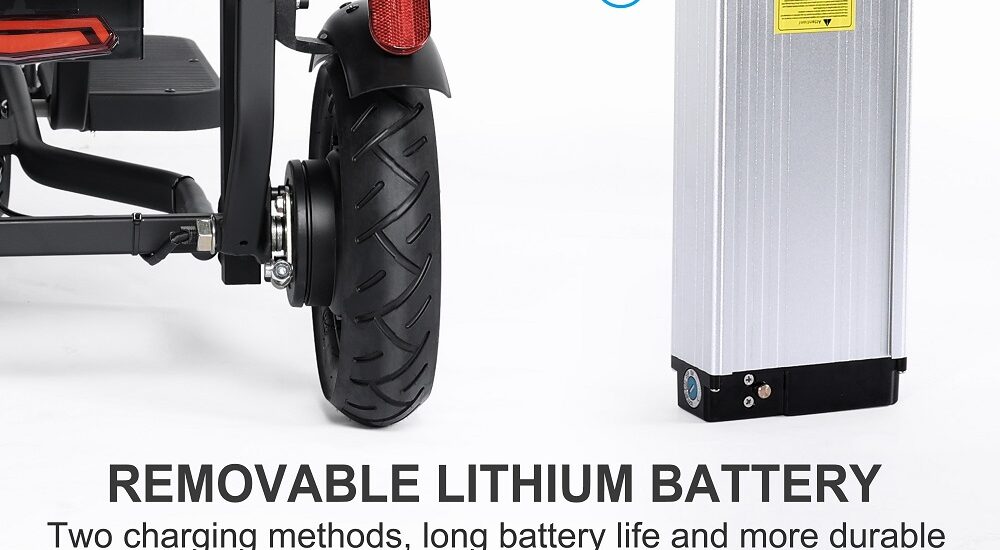
With a removable battery, the battery pack can be taken out and charged separately, assuming the particular scooter is designed for this.
That difference matters when the scooter lives somewhere that is not close to a power outlet.
For example, someone who keeps a scooter in an apartment building’s parking area may have no practical way to charge it there. A removable battery allows the user to leave the scooter downstairs and bring only the battery to an appropriate charging location.
Fixed vs Removable Battery: At a Glance
| Consideration | Fixed Battery | Removable Battery |
|---|---|---|
| Charging | Scooter stays near charger | Battery can be charged separately |
| Apartment storage | Less convenient if no outlet nearby | Often more convenient |
| Garage storage | Usually straightforward | Also works well |
| Carrying the scooter | Battery stays installed | Battery may be removed before lifting |
| Car transportation | Depends on scooter weight and folding design | Removing battery can reduce the load being lifted |
| Travel | Charging location matters more | More flexible charging options |
| Battery handling | Little handling required | Requires removal and reinstallation |
| Hand strength | No battery removal required | Depends on battery weight and grip |
| Storage | Scooter and battery remain together | Battery can be stored separately when appropriate |
| Best fit | Dedicated charging location | Flexible charging and frequent transportation |
The important point is that removable does not automatically mean better. It solves a specific problem: being able to separate the battery from the scooter.
How a Fixed Battery Scooter Fits Into Daily Life
A fixed battery system can be convenient when the scooter has a predictable home.
Imagine someone who parks a mobility scooter inside a garage after every outing. There is an electrical outlet nearby, and the scooter does not need to be carried upstairs or loaded into a car regularly.
In that situation, leaving the battery installed may actually be easier.
There is no battery to remove, carry indoors, reconnect, or check before the next ride.
When a Removable Battery Makes More Sense
A removable battery becomes more useful when the scooter and charging point are in different places.
Consider an apartment resident who keeps the scooter in a secured parking area. Bringing the entire scooter into the apartment every night may be impractical, particularly if there are stairs, narrow doors, or limited storage space.
If the scooter has a removable battery, the person may be able to secure the scooter downstairs and bring the battery indoors for charging.
Does a Removable Battery Make a Scooter Easier to Lift?
It can, but this is where buyers need to look beyond the word “removable.”
Removing a battery reduces the weight of the scooter only by the weight of the battery itself. It does not automatically make the remaining scooter easy to lift.
For someone loading a folding scooter into a car, the difference can still matter.
Apartment Living: Where Removable Batteries Have a Clear Advantage
Apartment storage is one of the strongest use cases for a removable battery.
A scooter might be parked in a building’s garage while the nearest suitable electrical outlet is inside the user’s apartment.
Moving the whole scooter several times a week may be inconvenient or impossible.
With a removable battery, the routine can be different:
- Park and secure the scooter.
- Remove the battery according to the manufacturer’s instructions.
- Take the battery to the approved charging location.
- Charge it using the correct charger.
- Reinstall it securely before riding.
The battery should be charged and stored according to the manufacturer’s instructions, rather than simply treating it like a general-purpose portable battery.
What About Small Cars and SUVs?
The battery decision can also matter when transporting a folding mobility scooter.
A removable battery can reduce the weight of the part that has to be lifted into a trunk or cargo area. That can be useful for someone who travels frequently but does not have the strength to lift the complete scooter comfortably.
Still, battery removal is only one part of the loading equation.
Before buying, measure:
- The vehicle’s trunk or cargo opening
- The available cargo depth and height
- The scooter’s folded dimensions
- The scooter’s weight without the battery
- The battery weight
- Whether the folded scooter has practical places to grip
An SUV may have plenty of interior space but still have a high lift-over height. A smaller car may have enough cargo volume but a narrow trunk opening.
In other words, fit and lifting weight matter more than battery type alone.
Travel, Airports, and Cruises
A removable battery can be convenient during travel because charging does not always happen in the same place where the scooter is stored.
For a road trip, for example, a traveler may park a scooter outside a hotel room while bringing the battery inside for charging, provided the manufacturer’s instructions and the accommodation’s charging rules allow it.
For cruises and air travel, however, removable does not mean automatically approved.
Lithium-battery mobility aids are subject to transportation requirements that can depend on battery chemistry, watt-hour rating, battery protection, and how the battery is installed or removed. The FAA notes that lithium-ion batteries used with mobility devices can be subject to a 300 Wh limit under its rules, with specific requirements depending on whether the battery remains installed or is removed. Airlines can also impose additional restrictions.
For international travel, IATA likewise recommends making advance arrangements with the airline and providing information about the mobility aid and its battery.
So before an airport trip, check:
- Battery chemistry
- Watt-hour rating
- Whether the battery can be removed
- Whether the battery is adequately protected
- The airline’s mobility-aid policy
- Any advance notification requirements
- How the airline wants the battery handled
Do not rely only on the scooter manufacturer’s statement that a scooter is “travel friendly.”
Charging Away From Home
This is one of the biggest practical differences between the two systems.
A fixed battery works best when the scooter can routinely return to a suitable charging point.
A removable battery provides more flexibility when the scooter and electrical outlet are separated.
For example:
Grocery trip:
The scooter remains in the garage or vehicle while the battery can be charged at home later.
Hotel stay:
The scooter can remain folded or stored in an approved location while the battery is charged where permitted.
RV trip:
The battery may be easier to manage when the scooter is stored outside the RV or in another compartment, provided charging is done safely and according to the manufacturer’s instructions.
The advantage is not necessarily faster charging. It is more flexibility about where charging can happen.
Which Battery System Is Easier for Seniors?
There is no universal answer.
A removable battery may be easier for a person who cannot move a scooter to an outlet but can comfortably carry and handle the battery.
A fixed battery may be easier for someone who has difficulty gripping, lifting, or correctly reinstalling a battery pack.
This is particularly important for older adults with reduced hand strength. A battery that is technically removable is not useful if the user cannot safely remove and reinstall it.
Battery Safety Matters More Than Fixed vs Removable
Whichever system you choose, follow the scooter and battery manufacturer’s charging instructions.
Do not use a damaged battery, damaged charger, or improvised replacement charger. Keep charging equipment away from moisture and use the recommended charging setup.
For removable lithium batteries, avoid carrying or storing a loose battery where its terminals could contact metal objects. Airline guidance also emphasizes protecting lithium batteries against damage and short circuits.
If the battery becomes unusually hot, swollen, damaged, or otherwise appears unsafe, stop using it and follow the manufacturer’s guidance.
A Simple Way to Decide
Instead of asking, “Which battery is better?” start with the charging routine.
| Your situation | Battery system to consider |
|---|---|
| Scooter stays beside a suitable outlet | Fixed or removable |
| Scooter is parked away from your home | Removable |
| Apartment with no parking-area outlet | Removable |
| Frequent car transportation | Removable may be useful |
| User has difficulty handling small battery packs | Fixed may be simpler |
| Caregiver handles charging | Either, depending on routine |
| Dedicated garage charging area | Fixed can work well |
| Frequent air travel | Check battery specifications and airline rules before choosing |
The table is a starting point, not a substitute for checking the actual scooter’s battery weight, dimensions, and charging requirements.
Where TopMate Models Fit
Battery configuration should be considered alongside the intended use of the scooter.
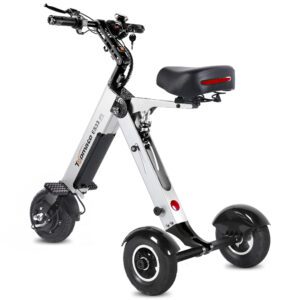
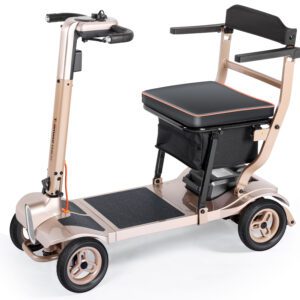
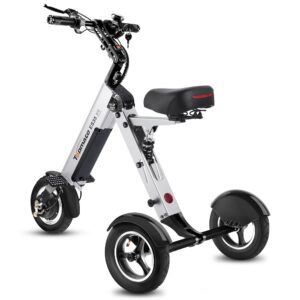
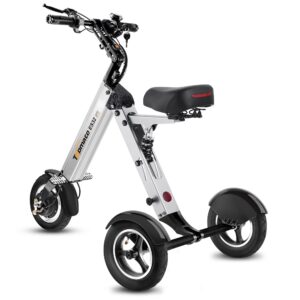
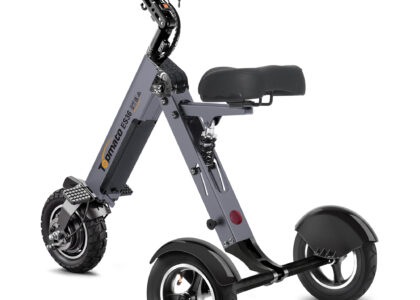
For example, the TopMate ES15 is positioned around lightweight portability, small-space storage, and frequent transportation. The ES35 is oriented toward everyday use while retaining portability and outdoor capability. The ES36 puts more emphasis on everyday comfort and stability, while the ES40 is positioned around compact folding and travel situations such as vacations and cruises.
That means the battery question should not be considered in isolation.
Someone choosing a scooter for frequent transportation may care about the battery being removable because it can affect loading and charging. Another person who primarily rides from a garage may care more about the scooter’s overall weight, comfort, and storage footprint.
Always check the individual model’s current specifications before purchasing because battery configuration, battery weight, and charging requirements can vary between models.
Common Mistakes to Avoid
Choosing removable simply because it sounds more convenient
A removable battery is useful only if you actually need to separate the scooter from its charging location.
Ignoring battery weight
If you plan to carry the battery upstairs or into a hotel room, its weight matters.
Looking only at total scooter weight
For vehicle transportation, compare the weight without the battery as well as the complete scooter weight.
Assuming removable means airline-approved
Air travel depends on battery specifications and airline requirements, not simply whether the battery comes out of the scooter.
Forgetting the charging location
Before buying, identify exactly where the scooter will be stored and where the battery will be charged.
Not checking the battery connection
If you choose a removable system, make sure the battery can be removed and reinstalled according to the manufacturer’s instructions without excessive force.
Final Takeaway
The choice between a fixed battery vs removable battery mobility scooter is really a choice about your daily routine.
A fixed battery can be perfectly practical when the scooter is stored close to a suitable charging outlet. A removable battery becomes more useful when the scooter is parked away from home, stored in a shared garage, transported regularly, or used during trips where charging the entire scooter is inconvenient.
For each option, look beyond the battery label. Consider where you store the scooter, who handles charging, how much the battery weighs, how the scooter fits in your vehicle, and whether you expect to travel by air.
For a frequent traveler or apartment resident, those practical details may matter more than a small difference in battery specifications.
FAQ
Is a removable battery mobility scooter better for apartment living?
It can be more convenient when the scooter is stored away from a suitable electrical outlet. You can potentially leave the scooter in its parking area and bring the removable battery to an appropriate charging location, provided the scooter and battery are designed for this use.
Does removing the battery make a mobility scooter easier to put in a car?
It can reduce the weight you need to lift, but the difference depends on the battery’s actual weight. Check the scooter’s weight without the battery, complete weight, folded dimensions, and carrying points before deciding whether it will be manageable for your vehicle.
Is a removable battery better for air travel?
Not automatically. Air travel depends on the battery type, watt-hour rating, how the battery is protected, and the airline’s current requirements. Contact the airline before traveling and provide the scooter and battery information they request.
Can a fixed battery mobility scooter be easier to use?
Yes. A fixed battery eliminates the need to remove and reinstall a battery pack. For someone who has difficulty gripping or lifting a removable battery, that simpler routine may be preferable if the scooter can be conveniently charged where it is stored.