
Why Advertised Range and Real-World Range Differ
A mobility scooter’s stated range should be treated as a maximum or test-condition figure, not a guaranteed distance for every journey.
The motor needs energy to overcome several forces:
- Rolling resistance from the tires
- Aerodynamic resistance
- Gravity on slopes
- Surface resistance from grass, gravel, or soft ground
- Additional weight from the rider and cargo
- Mechanical resistance from tires and drivetrain
On smooth, level pavement, much of the battery’s energy can be used for forward movement. On difficult terrain, a larger proportion of the available energy is used to overcome resistance.
That is why the same scooter and battery can produce different real-world distances on different routes.
Hills and Inclines Can Reduce Range
Hills are among the most significant terrain-related challenges because the scooter must work against gravity.
When climbing, the motor has to provide additional force to move the combined weight of the scooter, rider, battery, and cargo upward.
The steeper or longer the hill, the greater the energy requirement.
For example, imagine two routes to the same destination:
Route A: 3 miles of mostly level pavement
Route B: 3 miles with several moderate climbs
The physical distance is identical, but Route B can require more battery energy because part of the motor’s output is being used to gain elevation.
The effect is even more noticeable when the rider is close to the scooter’s maximum weight capacity.
Descending a hill does not simply “give the energy back.” Unless the scooter has a specific regenerative braking system, the energy used to climb the hill has already been consumed.
Grass Creates Additional Rolling Resistance
Grass can look harmless, but it can make a mobility scooter work harder than it does on pavement.
The effect depends on:
- Grass length
- Ground firmness
- Moisture
- Tire design
- Terrain slope
- Rider and scooter weight
A short, dry, firm lawn may be relatively manageable. Long or wet grass can create significantly more rolling resistance.
The tires can sink slightly into softer ground, increasing the effort required to move forward. The motor therefore draws more energy for the same travel distance.
For example, crossing a short grassy section at a park may have a modest effect, while regularly travelling hundreds of yards across soft grass can become a much more significant part of the battery budget.
Gravel and Loose Surfaces
Gravel introduces another challenge: rolling resistance and traction.
On smooth pavement, the tires roll over a relatively consistent surface. On loose gravel, the tires can move slightly through the surface rather than simply rolling across it.
Small stones can also reduce traction. When grip is less predictable, the rider may need to travel more slowly and the motor may have to work harder to maintain movement.
A compact gravel path is therefore not equivalent to the same-length paved path when estimating range.
Deep, loose gravel is particularly demanding and may exceed the terrain capability of some mobility scooters.
Rough and Uneven Terrain Increases Motor Workload
Uneven surfaces create repeated changes in rolling resistance.
Examples include:
- Broken pavement
- Cracked sidewalks
- Potholes
- Uneven paving stones
- Dirt tracks
- Rough compacted paths
The scooter must repeatedly move over small obstacles and changes in elevation. This can increase energy consumption while also placing greater mechanical demands on the tires, suspension, wheels, and drivetrain.
Ground clearance and wheel dimensions also become more important. A scooter designed primarily for smooth surfaces may not be appropriate for consistently rough terrain even if its battery has a large capacity.
Rider Weight Changes Energy Consumption
Terrain and rider weight interact.
A heavier total load means the motor must move more mass. On flat ground, this increases rolling resistance. On a hill, it also increases the force required to overcome gravity.
The relevant figure is not simply body weight. Consider the total load:
Rider + scooter accessories + shopping + other cargo
If a scooter is rated for a maximum user weight of 300 lb, that rating should not be interpreted as meaning the scooter will deliver the same range at 300 lb as it would with a substantially lighter rider.
Range testing is generally conducted under specified conditions, so real-world performance can change as the load changes.
Speed Also Affects Range
Speed is another important variable.
Travelling faster generally requires more energy, particularly because aerodynamic resistance increases with speed. Repeated acceleration from stops can also consume additional energy.
For example, a rider who travels continuously at a moderate speed may use less energy than someone who repeatedly accelerates to maximum speed, brakes, and accelerates again.
This matters on shopping-center routes and neighborhood trips where intersections, pedestrians, doors, and other obstacles naturally create stop-and-go riding.
If maximum range is the priority, following the manufacturer’s recommended operating practices and avoiding unnecessary high-speed acceleration can help conserve battery energy.
Tire Pressure and Tire Type Matter
Tires are the physical connection between the scooter and the ground.
For pneumatic tires, incorrect pressure can affect rolling resistance. Underinflation can increase the amount of tire deformation as the wheel rotates, potentially requiring more energy.
Tire type also influences terrain performance.
Pneumatic tires: Can provide cushioning and may perform well across various surfaces when correctly inflated.
Solid tires: Eliminate the need for inflation but have different rolling and shock-absorption characteristics.
Always follow the manufacturer’s recommended tire pressure rather than adjusting pressure solely to improve range.
Temperature Can Change Battery Performance
Terrain is not the only environmental factor affecting range.
Cold temperatures can temporarily reduce the amount of usable energy available from many battery chemistries, particularly lithium-ion and lead-acid systems. A scooter used outdoors in cold weather may therefore show less practical range than under moderate conditions.
Heat can also affect battery operation and should be managed according to the battery manufacturer’s instructions. mobility scooter battery range
For riders in colder parts of the USA, Canada, or the UK, winter range planning should account for temperature as well as terrain.
Battery Age Can Compound Terrain Effects
A newer battery and an older battery may not deliver the same practical range.
As a battery ages, its usable capacity can decline. When that happens, demanding terrain becomes more noticeable because hills, grass, and gravel already require additional energy.
A route that was comfortably within the scooter’s range when the battery was new may become marginal after significant battery aging.
If range has gradually declined over time rather than suddenly dropping, battery age and condition should be considered alongside terrain.
Real-World Terrain Examples
Shopping-center pavement
A mostly flat shopping-center route with smooth pavement, moderate speed, and few inclines represents a relatively favorable range scenario.
Neighborhood roads
A neighborhood route can vary considerably. Smooth roads with gentle slopes may be manageable, while repeated hills and frequent stops increase energy demand.
Driveway
A steep driveway can require substantially more motor effort than a flat section of road, particularly when carrying a heavier rider.
Grass
Short, firm grass may be manageable for a scooter designed for appropriate outdoor use. Wet, long, or soft grass can increase rolling resistance considerably.
Gravel path
Firm, compact gravel is generally less demanding than deep loose gravel. Loose surfaces can increase rolling resistance and reduce traction.
Moderate hills
Several moderate hills can consume more energy than a flat route of the same distance because the scooter repeatedly works against gravity.
How Can You Estimate the Range You Actually Need?
Start with your real route, rather than the manufacturer’s maximum range.
Record:
- One-way distance.
- Return distance.
- Number of significant hills.
- Amount of grass or gravel.
- Typical rider and cargo weight.
- Expected outdoor temperature.
- Frequency of stops and starts.
- Battery age and condition.
For example:
Home → shopping center: 3 miles
Shopping center → home: 3 miles
Total: 6 miles
If the route includes hills, grass, and gravel, do not plan your trip around a scooter’s advertised maximum range of 6 miles. You need additional operating margin because the published figure may have been obtained under more favorable conditions. mobility scooter battery range
How to Reduce Unnecessary Battery Consumption
You cannot eliminate the energy required by a hill, but you can avoid wasting additional energy.
- Keep pneumatic tires at the manufacturer’s recommended pressure.
- Avoid carrying unnecessary weight.
- Use an appropriate, controlled speed.
- Avoid repeated rapid acceleration.
- Choose smoother routes where practical.
- Avoid deep gravel and excessively soft ground unless the scooter is designed for it.
- Keep the battery properly charged and maintained.
- Plan additional battery margin for cold weather.
- Consider the condition and age of the battery when planning longer trips.
Practical Range-Planning Guide
Use this simple approach:
Mostly flat pavement: The manufacturer’s stated range can provide a useful starting reference, but still leave practical reserve.
Mixed pavement and gentle hills: Plan conservatively and account for repeated climbs, rider weight, and stops.
Regular grass or gravel: Treat the manufacturer’s maximum range as a less reliable estimate and allow additional reserve.
Frequent moderate hills: Prioritize a scooter with an appropriate gradeability rating and sufficient battery capacity rather than selecting one based on advertised range alone.
Older battery + demanding terrain: Reduce the planned trip distance further and investigate battery condition if the decline is substantial.
Where TopMate Models Fit
TopMate’s published specifications illustrate why battery capacity and terrain capability need to be considered together.
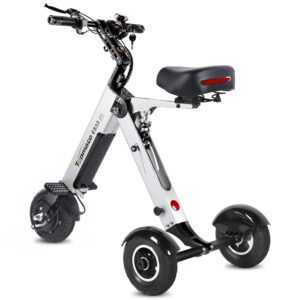
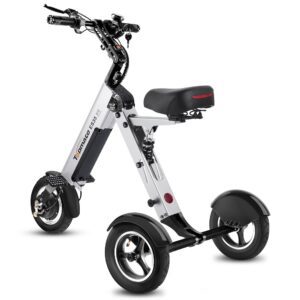
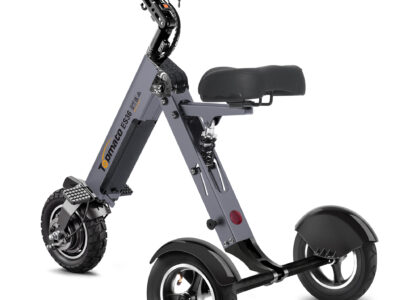
The TopMate ES15 is specified with a 36V 7.8Ah lithium-ion battery, equivalent to approximately 281Wh, a 500W dual-motor system, a maximum load capacity of 300 lb, and a stated maximum range of up to 13 miles. It uses 10-inch pneumatic tires.
The TopMate ES35 uses a 36V 7.8Ah lithium battery, a 250W brushless motor, has a 220.4 lb/100 kg maximum load, and is rated for up to 8° gradeability. Its official documentation specifies a maximum range of up to 15 miles under stated test conditions.
These specifications should not be interpreted as predictions for grass, gravel, hills, or other demanding terrain. A stated maximum range is a reference figure; the actual distance depends on the complete operating environment.
Final Takeaway
Terrain affects mobility scooter battery range because different surfaces require different amounts of rolling force, traction, and motor output.
Flat pavement is generally easier on the battery than grass, loose gravel, or sustained hills. Rider weight, speed, tire condition, temperature, and battery age can further amplify those differences.
The most reliable approach is to plan around your actual route and conditions, not simply the maximum number printed in a product specification. If your regular journey includes hills, grass, gravel, or rough surfaces, leave additional battery reserve and compare the scooter’s battery, motor, load capacity, tire specifications, and gradeability with the demands of that route.
FAQ
Does terrain affect mobility scooter battery range?
Yes. Hills, grass, gravel, and rough surfaces can increase rolling resistance and motor workload, causing the scooter to use more battery energy than it would on smooth, level pavement.
Do hills use more battery than flat roads?
Yes. Climbing a hill requires the motor to overcome gravity while moving the combined weight of the scooter, rider, and cargo. Steeper or longer hills generally require more energy.
Does riding on grass or gravel reduce mobility scooter range?
It can. Grass and loose gravel create greater rolling resistance than smooth pavement. Wet grass, soft ground, or deep gravel can require additional motor effort and may reduce practical range further.
How can I estimate my mobility scooter's real-world range?
Consider your actual route, including hills, grass, gravel, rider weight, speed, tire condition, temperature, and battery age. Use the manufacturer’s maximum range as a reference rather than a guaranteed distance, and maintain a reasonable battery reserve.

-scaled-2-420x300.jpg)