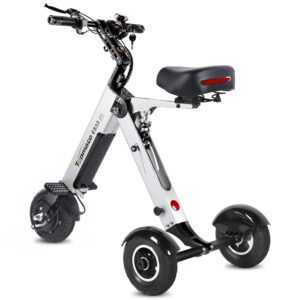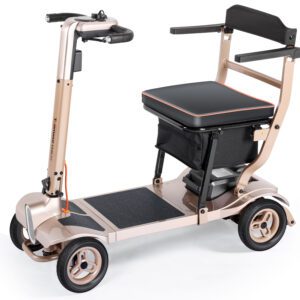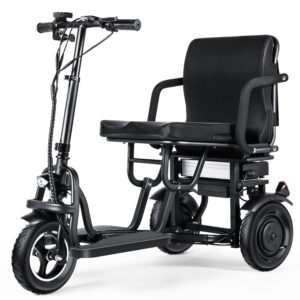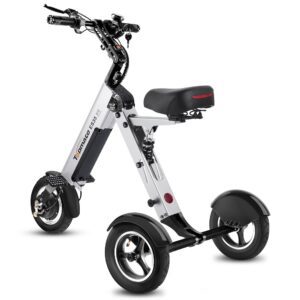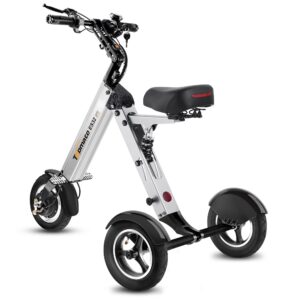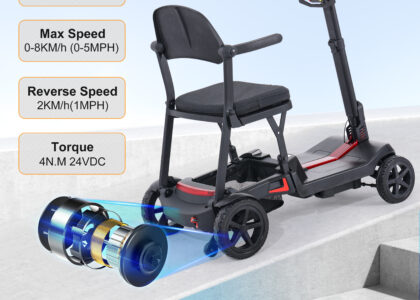
If you cannot test ride a mobility scooter before buying, focus on measurable specifications, rider fit, portability, controls, and real-world demonstrations. Compare the scooter with your body measurements, home, vehicle, and typical trips. Videos and reviews can show how it folds, turns, and handles, but they cannot completely replace a personal test ride.
Can You Buy a Mobility Scooter Without a Test Ride?
For many seniors, caregivers, and first-time buyers, visiting a mobility store is not practical. You may live far from a dealer, have limited transportation, or simply find that the model you want is sold primarily online.
That makes buying a mobility scooter online different from buying one after a test ride.
A test ride gives you immediate feedback about comfort, steering, controls, and maneuverability. Without one, you need to gather that information from specifications, measurements, videos, customer photos, and reviews.
The key is to stop asking, “Will I like this scooter?” and instead ask, “What can I verify before I buy it?”
What Can You Actually Evaluate Without a Mobility Scooter Test Ride?
Will the scooter fit my body and my home?
Start with mobility scooter dimensions, not photographs.
Check the scooter’s unfolded length and width, seat width, seat height, tiller position, turning radius, and ground clearance. Then compare those measurements with your own environment.
Measure:
- Doorways and hallways
- Elevator entrances
- Storage areas
- Closet or entryway space
- Vehicle openings
- Tight indoor turning areas
A scooter can look small online but still require considerable space to turn around furniture or enter a narrow doorway.
Is the mobility scooter weight manageable?
The advertised scooter weight needs closer examination.
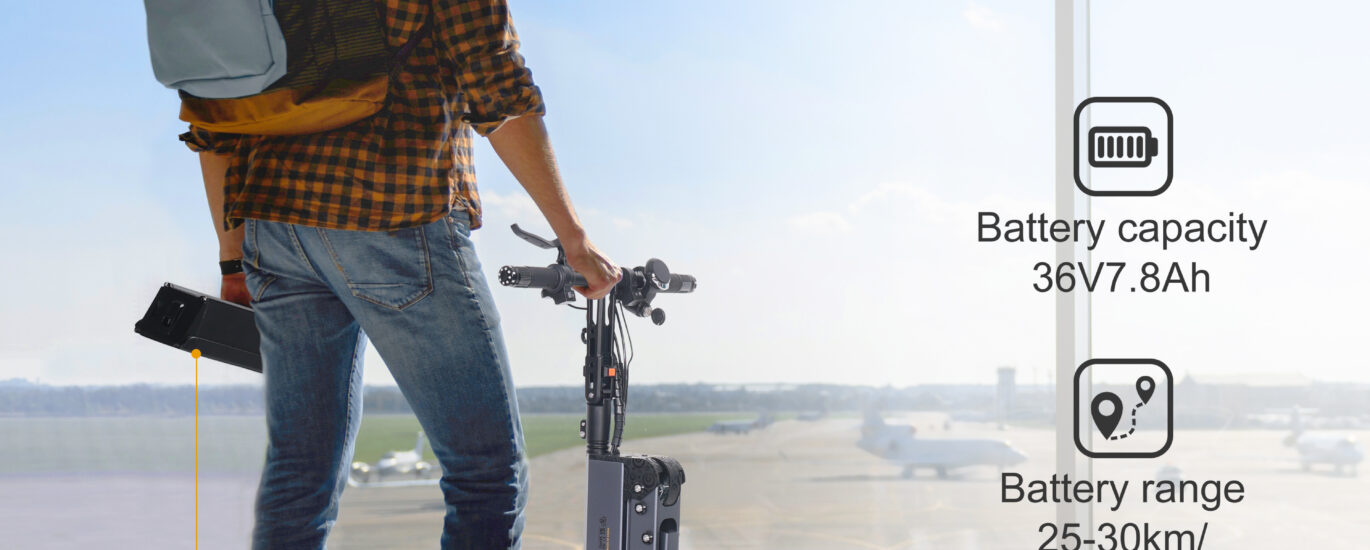
A manufacturer may list the complete scooter weight, but you may not actually lift it as one piece. Check whether the battery is removable and find out the weight of the scooter with and without the battery.
Before buying, identify the heaviest component you will personally need to lift.
This is particularly important when loading the scooter into a car. A scooter that is technically portable may still be impractical if its heaviest component is too difficult for you or your caregiver to handle safely.
Is the seat likely to fit me?
Seat width is an important starting point, but it does not tell the entire story.
Look at photos and videos showing an actual rider. Pay attention to:
- Legroom
- Knee position
- Back posture
- Distance from the seat to the tiller
- Arm position
- Ease of getting on and off
If you already have a comfortable chair, measure its seat width and compare it with the scooter.
You cannot guarantee personal comfort from measurements alone, but this approach gives you more useful evidence than judging a seat from a product photo.
Can I reach and understand the controls?
The tiller and controls deserve attention when buying a mobility scooter for seniors without a test ride.
Look for a video showing the controls being used. Can the rider comfortably reach the throttle, switches, horn, and other functions? Does the tiller appear to require a large amount of hand movement?
If you have limited hand strength or prefer simple controls, ask the seller for close-up photographs or a demonstration before ordering.
Will it turn where I need it to?
Turning radius is particularly important for indoor use.
Think about where you will actually ride. A scooter may work well in an open parking lot but feel very different in a kitchen, apartment hallway, elevator, shop aisle, or crowded venue.
A real-world video showing tight turns can help you understand how the scooter behaves in confined spaces.
What Can You Learn From a Real-World Video?
A good YouTube review can provide information that a specification sheet cannot.
Look for videos that show the scooter being used rather than simply discussed.
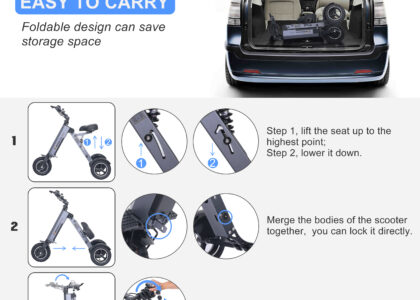
Watch the folding process
Observe how the scooter folds and how many steps are involved. Does the person need significant strength? Can they complete the process alone?
[YouTube Review Embed: Real-world folding demonstration]
What readers should learn: Watch the complete folding and unfolding process, including how compact the scooter becomes and whether one person appears able to manage it comfortably.
Look at an actual rider
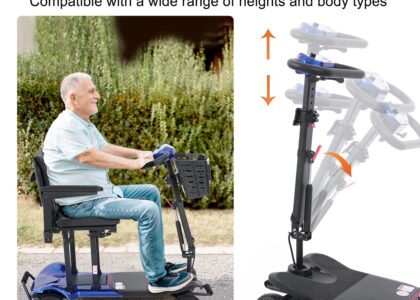
A customer photo can provide useful visual context that a studio product image cannot.
[Customer Photo: Rider seated on scooter]
What readers should learn: Use the rider as a reference for seat width, legroom, posture, tiller reach, and the scooter’s overall proportions.
See how it fits in a vehicle
Vehicle loading is one of the biggest unknowns when buying online.
[Customer Photo: Scooter folded in vehicle]
What readers should learn: Look at the scooter’s actual folded footprint and how much vehicle cargo space it occupies. Compare the image with your own trunk or cargo area measurements.
Watch real-world maneuverability
What readers should learn: Watch steering, turning, stopping, control use, doorways, indoor spaces, and tight corners. Real movement can reveal practical details that specifications cannot.
Videos are valuable evidence, but they still cannot replace a personal test ride. The rider in a video may have a different height, weight, strength, or mobility level, and camera angles can distort the apparent size of a scooter.
How Important Are Battery and Range Specifications?
Battery range should be viewed as an estimate rather than a promise.
Check the stated range, battery type, capacity where available, charging time, and whether the battery is removable.
Then think about your actual day.
For example, a trip may include driving from a parking area to a store, riding around the store, visiting another location, and returning to the vehicle. Hills, rider weight, terrain, temperature, speed, and frequent stopping can affect real-world range.
A removable battery can also make charging more convenient if the scooter is stored somewhere that is not close to an electrical outlet.
What Should You Check Before Loading and Storing the Scooter?
A foldable mobility scooter is not automatically easy to transport.
Before ordering, check:
- Folded length, width, and height
- Total weight
- Weight without the battery
- Heaviest component
- Lifting points
- Removable battery
- Vehicle cargo opening
- Available trunk or cargo space
- Home storage area
Measure your vehicle rather than assuming the scooter will fit because it is advertised as “compact.”
Also consider where you will store it at home. An apartment entrance, closet, garage, or hallway may have very different space requirements.
How Can TopMate Models Be Evaluated Without a Test Ride?
The same approach can be used when considering TopMate models.
The ES15 can be evaluated around its compact, portable use case. The ES35 and ES36 should be considered according to their respective specifications and intended travel or everyday-use requirements. The ES40 is relevant when folding portability and travel are important priorities.
Rather than treating one model as universally suitable, compare each model’s current specifications with your own needs.
Check its weight, folded dimensions, rider capacity, battery configuration, seating arrangement, and intended use. Then look for demonstrations showing that specific model being folded, transported, ridden, and maneuvered.
What Should I Ask Before Ordering Online?
Before You Buy Checklist
Before buying a mobility scooter without test ride, make sure you can answer these questions:
- What is the complete scooter weight?
- What is the heaviest part I need to lift?
- What are the folded dimensions?
- Will it fit through my doors and elevator?
- Will it fit through my vehicle’s cargo opening?
- Is the rider comfortably below the stated weight capacity?
- Is the seat wide enough?
- Does the seating position look suitable?
- Can I comfortably reach the controls?
- What is the turning radius?
- Is the ground clearance suitable for my normal routes?
- What range can I realistically expect?
- Is the battery removable?
- Where will I charge it?
- Where will I store it?
- Can I fold and unfold it safely?
- Have I watched a real-world video?
- Have I checked the return, warranty, and battery policies?
If several important questions remain unanswered, contact the seller before ordering.
How I’d Decide
I would treat the purchase as a fit-and-use decision, not simply a specification comparison.
First, measure the rider and the spaces where the scooter will be used. Next, determine how much weight you or your caregiver can realistically lift. Then consider your typical trip length, charging location, vehicle, and storage space.
After that, watch real-world videos and focus on the things specifications cannot show well: folding, steering, turning, rider posture, controls, and vehicle loading.
Finally, check the return and warranty policies. When a mobility scooter test ride is not possible, having a clear way to address an unexpected fit or usability problem becomes especially important.
Common Mistakes to Avoid
Relying only on product photos: Photos rarely show true scale or maneuverability.
Looking only at total weight: Find out how much the actual component you need to lift weighs.
Ignoring folded dimensions: A folding scooter still needs to fit your vehicle and storage area.
Treating maximum range as guaranteed: Real conditions can reduce battery range.
Choosing only by weight capacity: Rider fit, seating, controls, and maneuverability matter too.
Watching only promotional videos: Look for independent reviews and customer-generated content where possible.
Skipping the return policy: Online purchases have more uncertainty when you cannot test ride beforehand.
FAQ
Can I buy a mobility scooter without a test ride?
Yes. You can evaluate a mobility scooter by checking its dimensions, weight, seat size, weight capacity, controls, turning radius, battery range, folding process, and real-world reviews. However, online information cannot completely confirm personal comfort or handling, so check the return and warranty policies before buying.
How can I tell if a mobility scooter will fit me?
Compare the scooter’s seat width, legroom, seating position, and overall dimensions with your own measurements. Photos and videos showing real riders can also help you judge posture and reach. Measuring a chair you already find comfortable can provide a useful reference.
Can YouTube reviews replace a mobility scooter test ride?
No. YouTube reviews can show how a scooter folds, unfolds, steers, turns, and fits into a vehicle. They can also show controls and rider posture. However, another person’s experience may differ from yours, so videos should be treated as useful evidence rather than a complete replacement for a test ride.
What should I check before buying a mobility scooter online?
Check the scooter’s total and carry weight, folded dimensions, seat size, weight capacity, turning radius, ground clearance, battery range, folding process, storage requirements, and vehicle compatibility. Also review the return policy, warranty, battery information, and customer support before ordering.