Quick Answer
The right mobility scooter for daily routine depends on where you go, how often you travel, how far you typically ride, and how the scooter will be stored and transported. Instead of choosing based on speed or one specification, match portability, range, comfort, maneuverability, weight capacity, and charging needs to your normal day.
Key Takeaways
- Think about your actual daily activities before comparing scooter specifications.
- Indoor users usually need maneuverability and compact dimensions more than long range.
- People who combine several errands need enough battery range, comfort, storage, and carrying practicality.
- If the scooter travels in a car, its actual lift weight and folded size can matter more than maximum speed.
- Outdoor users should pay closer attention to ground clearance, wheel configuration, stability, and terrain.
- There is no single specification that makes a mobility scooter right for everyone.
Why Your Daily Routine Matters More Than a Single Specification
It is easy to start shopping by asking, “How fast does it go?” or “How far can it travel?”
Those questions are useful, but they do not tell you whether a scooter will fit your everyday life.
Consider two people who both need a mobility scooter. One may spend most of the day moving around an apartment, visiting a nearby store, and attending appointments. Another may spend several hours outdoors, visit multiple places, and load the scooter into a vehicle.
They have very different requirements.
The better starting question is:
“What will I actually do with my scooter on a normal day?”
Think about your usual destinations, distances, surfaces, storage location, transportation needs, and how much help you have available. Then use those answers to decide which specifications deserve the most attention.
How to Map Your Routine to Scooter Features
How much will you carry?
Scooter weight affects portability, especially when you need to place the scooter in a vehicle or move it around your home.
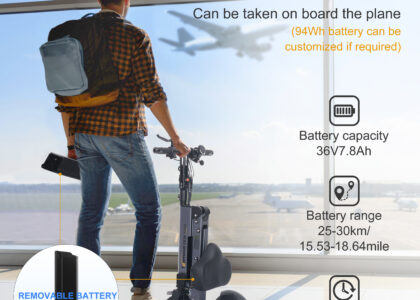
If someone else will regularly lift it, the total weight still matters. If you will handle it yourself, consider the actual lift or carry weight, not simply the advertised scooter weight. A removable battery can make handling easier on some models.
How much space do you have?
Measure where the scooter will be stored.
Check the space near your entrance, inside a closet, in a garage, or beside furniture. If you live in an apartment, also consider elevator access and door widths.
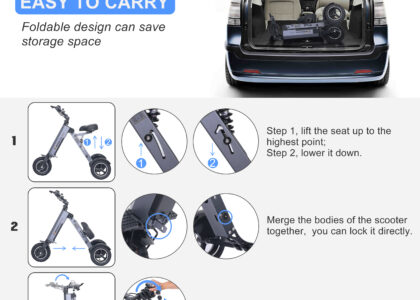
Folded dimensions are particularly important for portable scooters. A scooter that folds compactly can be easier to store, but you should still confirm that its folded shape fits your intended space.
How far do you really travel?
Battery range should be considered against your normal day rather than an occasional maximum-distance trip.
Think about the total distance between your home and your usual destinations. If you visit a grocery store, doctor’s office, community center, and family member in one outing, add those trips together.
Also allow some margin for real-world conditions, including stops, slopes, surface changes, passenger weight, and battery usage.
Do you need to turn in tight spaces?
Turning radius becomes important when your routine includes narrow hallways, small stores, elevators, crowded entrances, or furniture-filled rooms.
For primarily indoor use, maneuverability may be more important than having a long-range battery.
How long will you sit on the scooter?
Seat comfort matters when a short trip becomes several hours of use.
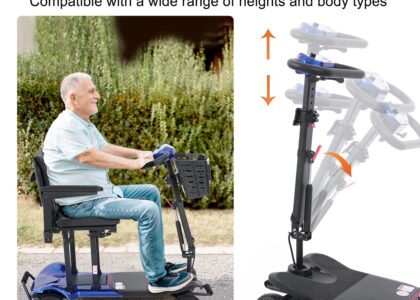
Look at seat design, support, positioning, and whether the riding position feels natural. Controls should also be easy to understand and operate without requiring excessive hand movement.
The tiller should be positioned comfortably for the rider. First-time users may benefit from straightforward controls rather than unnecessary complexity.
What surfaces will you encounter?
A scooter used mostly on smooth indoor floors has different requirements from one used around parks, sidewalks, or uneven outdoor paths.
For outdoor use, consider:
- Ground clearance
- Wheel configuration
- Tire design
- Stability
- Suspension, where available
- Surface conditions
- Slopes and transitions
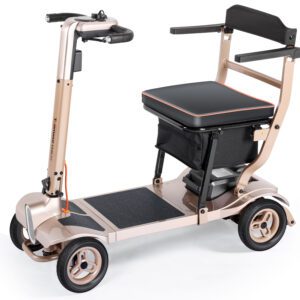
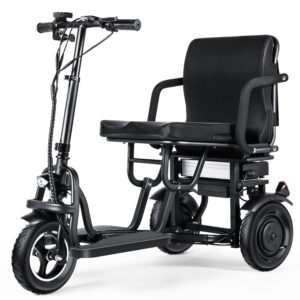
Four-wheel designs may appeal to buyers who prioritize a broader platform and stability, while compact configurations can be useful where maneuverability and portability are priorities. The right choice depends on the environments in your routine.
Which Features Matter for Different Daily Routines?
| Daily routine | Features to prioritize | Why they matter |
|---|---|---|
| Mostly indoors + nearby shops | Compact size, turning radius, easy controls | Easier movement through rooms and tight spaces |
| Multiple errands in one day | Battery range, comfort, storage, weight capacity | Supports longer outings with several stops |
| Doctor visits + appointments | Portability, comfort, reliability, maneuverability | Useful for repeated trips and indoor facilities |
| Frequent car transportation | Folded dimensions, lift weight, removable battery | Makes loading and unloading more manageable |
| Parks + outdoor trips | Ground clearance, wheels, stability, range | Better suited to varied surfaces |
| Community and family visits | Comfort, range, storage, portability | Supports longer days away from home |
5 Real-Life Daily Routine Scenarios
1. Mostly Indoors With Nearby Errands
Imagine a senior who uses a scooter around an apartment or retirement community and occasionally travels to a nearby grocery store.
This user may not need the longest possible range. A compact scooter with good maneuverability could be more useful.
The priorities would likely include folded dimensions, turning ability, easy controls, comfortable seating, and convenient charging.
2. Grocery Shopping, Appointments, and Family Visits
Another user may leave home in the morning, visit a doctor’s office, stop at a grocery store, and then visit family.
Here, range and comfort become more important. The rider may spend several hours away from home, so battery capacity should match the entire outing rather than just one destination.
Storage can also matter when carrying personal items or small shopping bags.
3. A Caregiver Choosing for a Parent
A caregiver may be asking a different question: “Can my parent actually use and manage this scooter?”
Consider who will charge it, move it, store it, and transport it.
Controls should be understandable. The scooter should be manageable for the rider. If the caregiver will load it into a vehicle, weight and folded dimensions become especially important.
The most technically capable scooter is not necessarily the most practical choice if it does not fit the person’s normal routine.
4. Frequent Car Transportation
Suppose the scooter will regularly travel in a sedan, hatchback, SUV, or another vehicle.
Do not look only at whether the scooter folds.
Check the folded dimensions and the weight you actually need to lift. Also consider whether the battery can be removed and whether there are practical places to grip the scooter during loading.
Try to visualize the entire process: parking, removing the scooter, unfolding it, using it, folding it again, and loading it back into the vehicle.
5. Mostly Outdoor Use
For someone who spends more time outdoors, the priorities can change.
Think about sidewalks, local parks, paved paths, small slopes, uneven transitions, and longer distances.
Ground clearance, wheel configuration, stability, range, and comfortable seating may deserve more attention than extremely compact folding dimensions.
Your Daily Routine Checklist
Before buying a mobility scooter, answer these questions:
Common Mistakes Buyers Make
Choosing the longest range automatically
More range can be useful, but additional battery capacity may come with extra weight or size. If most trips are short, portability and maneuverability may be more important.
Focusing only on maximum speed
Speed does not determine whether a scooter fits inside your home, turns easily, or can be transported in your vehicle.
Ignoring storage
A scooter has to live somewhere when it is not being used. Measure your available storage area before buying.
Looking at total weight instead of handling
A published weight does not always tell you how easy a scooter will be to load. Think about removable batteries, folding design, grip points, and who will actually handle it.
Buying for an occasional trip instead of everyday use
It can be tempting to choose specifications for a rare long-distance outing. However, your everyday routine should normally be the starting point.
How to Make the Final Decision
Start by writing down a typical day.
For example:
Home → doctor’s appointment → grocery store → family visit → home
Now consider each part of that journey.
Will you need to maneuver indoors? How far will you travel? Where will you charge the scooter? Will you carry it in a car? Will you encounter uneven outdoor surfaces? How long will you sit on it?
Then rank your priorities.
For some people, portability will come first. For others, range or outdoor capability may matter more. A caregiver may prioritize ease of handling and controls, while an apartment resident may place compact storage near the top of the list.
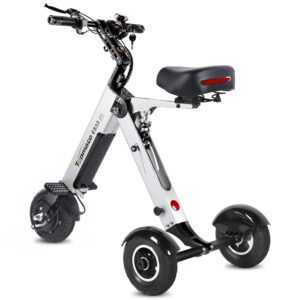
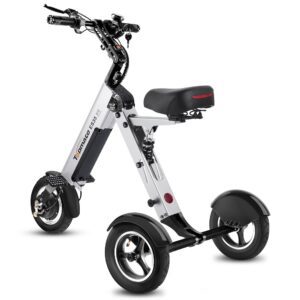
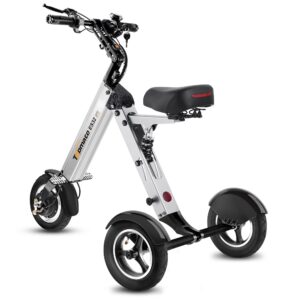
Models such as the TopMate ES15, ES35, ES36, and ES40 can be considered when their particular combination of portability, folding design, range, capacity, and intended use matches the buyer’s routine. However, the model should come after the routine—not before it.
The goal is not to find the scooter with the biggest number in every category.
The goal is to find a scooter whose important features match the way you actually live.
Final Thought
Choosing a mobility scooter for daily routine becomes much easier when you stop asking, “Which scooter has the best specifications?” and start asking, “Which specifications will make my normal day easier?”
Map your destinations, distances, storage space, transportation needs, surfaces, and comfort requirements first. Then compare scooters based on those priorities. mobility scooter for daily routine
That approach can help seniors, caregivers, and first-time buyers avoid paying attention to features they may rarely use while overlooking the ones that affect everyday convenience.
FAQ
How do I choose a mobility scooter for everyday use?
Start by considering where you normally go, how far you travel, and how the scooter will be stored and transported. Compare range, weight, maneuverability, comfort, weight capacity, controls, and charging requirements based on your actual daily routine.
What is the most important feature of a mobility scooter?
There is no single feature that is most important for everyone. Indoor users may prioritize maneuverability and compact dimensions, while outdoor users may need greater range, ground clearance, and stability. Choose features according to your normal activities.
Should I choose a lightweight mobility scooter?
A lightweight scooter can be helpful if you regularly move or transport it. However, check the actual lifting weight, folded dimensions, removable battery options, and available grip points rather than judging portability from total weight alone.
How much battery range do I need for daily use?
Estimate the total distance of your typical day, including all planned stops. Leave some additional capacity for real-world conditions and unexpected trips. Someone making several daily stops will generally need more range than someone traveling only short distances near home.