Quick Answer
Many mobility scooter advertisements highlight impressive features, but not every claim tells the complete story. Before purchasing, compare advertised features with the official specifications, warranty details, battery information, and user manual. Verifying battery range, speed, charging time, weight capacity, weather resistance, and warranty coverage helps buyers choose a mobility scooter that truly fits their needs instead of relying solely on marketing language. Common Mobility Scooter Claims
Key Takeaways
- Marketing claims often describe performance under ideal testing conditions.
- Compare official specifications instead of promotional headlines.
- Battery range, speed, and charging time vary in real-world use.
- “Airline-approved” does not guarantee acceptance by every airline.
- Waterproof and weather-resistant are different.
- Maintenance-free does not mean maintenance is never required.
- Read warranty coverage carefully before purchasing.
- Asking the right questions leads to a smarter buying decision.
Why Marketing Claims Can Be Misleading
Shopping for a mobility scooter online is easier than ever, but marketing language can sometimes simplify complex specifications. Terms like long-range battery, heavy-duty, fast charging, or maintenance-free are designed to attract attention, yet they often describe performance under specific testing conditions.
For example, battery range may be tested on flat pavement with a lightweight rider, while your daily use could include hills, heavier loads, frequent stops, or uneven sidewalks. Understanding the difference between advertised performance and real-world performance helps buyers make informed decisions.
Comparison Table
| Marketing Claim | What It Usually Means | What Buyers Should Verify |
|---|---|---|
| Long Battery Range | Maximum distance under ideal conditions | Test conditions, rider weight, terrain, battery type |
| Fast Charging | Short charging time in optimal conditions | Average charging hours, charger type, battery capacity |
| Lightweight Design | Easier to transport | Total scooter weight, folded weight, lifting requirements |
| Heavy-Duty Capacity | Supports higher rider weight | Does performance change at maximum load? |
| Airline Approved | Meets general battery guidelines | Airline policies, battery watt-hours, removable battery |
| Waterproof | Some water protection | IP rating, rain recommendations, operating conditions |
| Maintenance-Free | Low routine maintenance | Required inspections, battery care, tire maintenance |
| Lifetime Battery | Long battery lifespan | Battery warranty, replacement availability, charging cycles |
Verify Battery Range Claims
Battery range is one of the most important mobility scooter specifications.
Manufacturers often advertise the maximum possible range, but real-world distance depends on:
- Rider weight
- Terrain
- Hills
- Battery age
- Tire pressure
- Weather
- Driving speed
- Number of stops
Comparison: Advertised vs Real-World Battery Range
| Advertised Situation | Everyday Reality |
|---|---|
| Flat pavement | Mixed sidewalks and slopes |
| Lightweight rider | Rider plus bags or groceries |
| Mild weather | Hot or cold temperatures |
| Fully charged battery | Battery with normal daily use |
| Constant speed | Frequent stops and starts |
Instead of asking “How far does it go?”, ask “Under what conditions was this range tested?”
Understand Speed Claims
Maximum speed is usually measured under ideal conditions with a fully charged battery on level ground.
For everyday riding, stability, smooth acceleration, and predictable handling are often more important than maximum speed.
Speed Claims Comparison
| Marketing Focus | Better Buying Question |
|---|---|
| Top Speed | Is the scooter comfortable at normal cruising speed? |
| Fast Acceleration | Is acceleration smooth for seniors? |
| High Performance | Is braking reliable? |
| Powerful Motor | Can it climb everyday inclines safely? |
Check Weight Capacity Carefully
Weight capacity is more than the rider’s body weight.
It should also include:
- Shopping bags
- Backpack
- Oxygen equipment
- Medical supplies
- Accessories
As the load increases, battery range and hill-climbing ability may decrease.
Weight Capacity Comparison
| Marketing Claim | What Buyers Should Check |
|---|---|
| 300 lb Capacity | Does this include luggage? |
| Heavy-Duty Frame | Frame material and stability |
| High Performance | Performance at maximum load |
| Large Seat | Actual seat dimensions |
Verify Charging Time
Some advertisements promise fast charging, but charging speed depends on battery size and charger output.
Charging Claim Comparison
| Marketing Claim | Verify This Instead |
|---|---|
| Fast Charging | Average charging hours |
| Overnight Ready | Battery size |
| Quick Recharge | Charger specifications |
| Long Battery Life | Charging cycle recommendations |
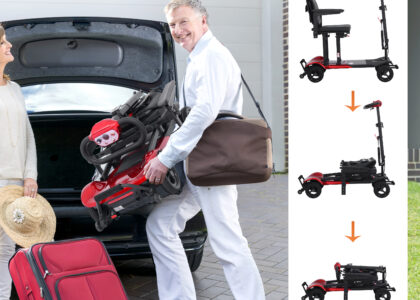
Understand Airline-Approved Claims
Many buyers search for travel-friendly scooters.
However, “airline-approved” is not a universal approval.
Always verify:
- Battery chemistry
- Watt-hour rating
- Removable battery
- Airline documentation
- Individual airline policies
Airline Claim Comparison
| Marketing Claim | What to Confirm |
|---|---|
| Airline Approved | Airline acceptance policy |
| Travel Ready | Battery removal process |
| Fly Anywhere | Country-specific regulations |
| TSA Friendly | Airport assistance procedures |
Waterproof vs Weather Resistant
Many people assume waterproof means the scooter can be used in heavy rain.
That is not always true.
Protection Rating Comparison
| Claim | Reality |
|---|---|
| Waterproof | May only resist limited water exposure |
| Weather Resistant | Usually suitable for light rain only |
| Outdoor Use | Check manufacturer recommendations |
| All-Weather | Verify IP protection rating |
Always review the recommended operating conditions before riding in wet weather.
Maintenance-Free Claims
Modern mobility scooters require less maintenance than many vehicles, but none are completely maintenance-free. Common Mobility Scooter Claims
Regular inspections should include:
- Tires
- Brakes
- Battery
- Lights
- Folding mechanism
- Charging cable
Maintenance Comparison
| Marketing Claim | Actual Ownership |
|---|---|
| Maintenance-Free | Periodic inspections are still needed |
| No Service Needed | Battery care remains important |
| Worry-Free | Routine safety checks improve reliability |
Lifetime Battery Claims
Rechargeable batteries naturally lose capacity over time.
Battery lifespan depends on:
- Charging habits
- Temperature
- Frequency of use
- Storage
- Number of charging cycles
Battery Claim Comparison
| Marketing Claim | Better Question |
|---|---|
| Lifetime Battery | What is the expected cycle life? |
| Long-Lasting Battery | Is a replacement battery available? |
| Premium Battery | What warranty covers the battery? |
Read Warranty Claims Carefully
A long warranty does not automatically mean comprehensive coverage.
Review:
- Battery warranty
- Frame warranty
- Electronics coverage
- Wear-and-tear exclusions
- Labor costs
- Parts availability
Warranty Comparison
| Marketing Statement | Verify Before Buying |
|---|---|
| 5-Year Warranty | Which parts are covered? |
| Comprehensive Warranty | Are batteries included? |
| Full Coverage | Shipping responsibilities |
| Easy Claims | Customer support process |
Mobility Scooter Specification Checklist
Instead of comparing advertisements, compare specifications.
| Category | What to Compare |
|---|---|
| Performance | Speed, range, climbing ability |
| Battery | Type, charging time, removable battery |
| Comfort | Seat size, suspension, adjustability |
| Portability | Weight, folded dimensions, lifting requirements |
| Safety | Brakes, lights, anti-tip wheels |
| Ownership | Warranty, maintenance, replacement parts |
Red Flags to Watch For
Be cautious if a product listing has:
- Missing technical specifications
- No battery details
- No warranty information
- Unrealistic range claims
- Vague descriptions
- No user manual
- No replacement parts information
- Limited customer support details
Transparent product information makes comparison easier and supports informed purchasing decisions.
Smart Buying Tips
Rather than choosing the scooter with the biggest advertised numbers, compare products based on how you plan to use them each day. Think about travel distance, storage space, portability, charging routine, and comfort. Review official specification sheets, compare warranty coverage, and ask questions before buying. A careful comparison helps ensure your mobility scooter matches your lifestyle and long-term mobility needs.
Conclusion
Common Mobility Scooter Claims are useful for introducing product features, but they should never be the only factor in your buying decision. Verifying official specifications, understanding testing conditions, reviewing warranty details, and comparing multiple models provide a clearer picture of real-world performance. Whether you’re a first-time buyer, caregiver, or budget-conscious shopper, taking the time to evaluate the facts behind the claims can help you choose a mobility scooter with greater confidence and avoid unexpected surprises after purchase.
FAQ
Why should I verify mobility scooter marketing claims?
Marketing claims often describe performance under ideal testing conditions. Reviewing official specifications provides a more accurate picture of everyday performance.
Is the advertised battery range guaranteed?
No. Actual range depends on rider weight, terrain, weather, speed, battery condition, and driving habits.
Does airline-approved mean every airline will accept the scooter?
No. Each airline has its own policies regarding battery type, watt-hour limits, and advance approval requirements.
What should I compare before buying a mobility scooter?
Compare battery range, charging time, weight capacity, scooter weight, folded dimensions, warranty coverage, battery type, safety features, and maintenance requirements instead of relying only on marketing claims.