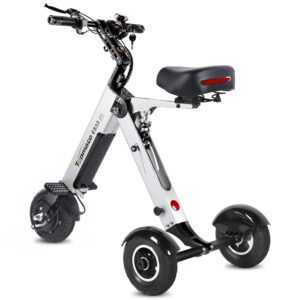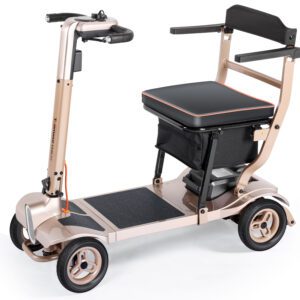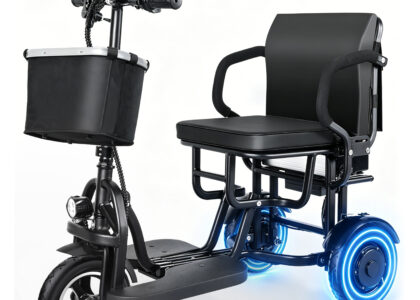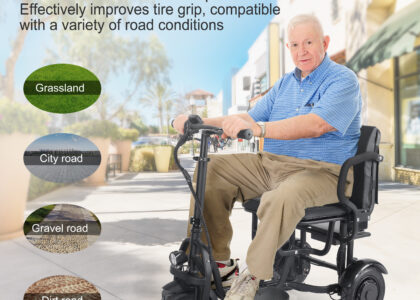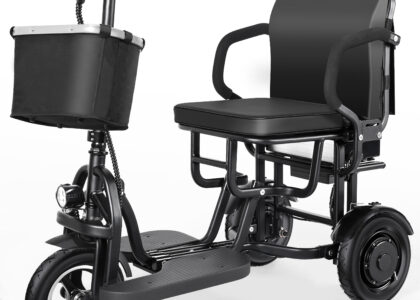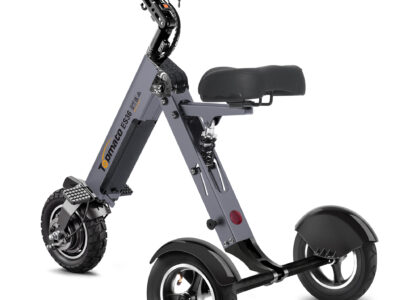
Getting to a restaurant, community center, shopping mall, or public event can be the easy part. The frustrating moment may come when you need to get onto or off your mobility scooter.
Imagine arriving at a restaurant and finding that the scooter is slightly too high for your preferred sitting position. The armrests are in the way. There is a wall on one side and another chair on the other. You cannot position your feet comfortably, and turning your body to stand up feels awkward.
This is why the best mobility scooter for easy transfer is not necessarily the scooter with the most comfortable seat.
Riding comfort and transfer comfort are two different things. A scooter can feel comfortable after you are seated while still being difficult to approach, sit on, stand from, or transfer beside.
For public venues, the better question is: Can I repeat my normal transfer movement without fighting the scooter’s design or the surrounding space?
Why Transfers Become Difficult
Transfers can become awkward for several practical reasons.
Seat positioned too high or too low
Seat height affects how far you need to lower yourself when sitting and how much effort is required to stand. The ideal height is personal, so do not assume a particular number works for everyone.
Armrests create obstacles
Armrests can improve riding comfort but may interfere with a sideways transfer. Fixed or bulky armrests can make it harder to bring your body close to the seat.
Tiller placement
A tiller positioned close to the rider can restrict movement during a transfer. Before buying, check whether you can approach the seat from your preferred side without hitting the steering column.
Limited side access
A narrow scooter may be easier to position in a crowded restaurant, but the available space beside the seat matters just as much as the scooter’s overall width.
Incorrect parking position
Even a transfer-friendly scooter becomes difficult if it is parked at an awkward angle. Public venues may leave you with limited room to straighten the scooter before sitting down or standing.
Tight spaces and uneven surfaces
A table, wall, curb, doorway, or uneven pavement can change the transfer completely. A flat showroom floor does not always reproduce the conditions you encounter outside.
The Transfer-Friendly Scooter Checklist
Instead of looking for a vague “easy-access” label, inspect the actual design.
Before buying, check:
- Seat height: Can you sit down and stand up without excessive reaching or lowering?
- Seat width: Is there enough room to position yourself comfortably?
- Seat edge: Can you get close enough to the seat before sitting?
- Armrests: Can your preferred transfer side remain unobstructed?
- Tiller position: Does the steering column leave enough room for your legs and torso?
- Foot placement: Can both feet reach the floor or footwell naturally?
- Scooter width: Can you approach from the side in typical public spaces?
- Side clearance: Is there enough room beside the scooter for your normal movement?
- Parking flexibility: Can the scooter be positioned close to a chair or table?
The goal is not simply a scooter that is comfortable after you sit down. It should also work with the movement you use before and after riding.
What to Measure Before Buying
Marketing descriptions such as “compact,” “comfortable,” or “easy to use” cannot tell you whether a scooter will suit your transfer routine.
Measure the actual dimensions.
Seat height
Find the distance from the ground to the usable sitting surface. Consider the compression of the seat cushion as well.
Seat dimensions
Check seat width and depth. A seat that is too narrow can restrict movement, while an oversized seat may make a side transfer more difficult for some users.
Scooter width
Measure the widest point rather than relying only on the frame width.
Side clearance
Measure how much space you normally need beside the scooter. Then compare that with the spaces where you regularly transfer.
Tiller position
Look at how far the tiller extends toward the seat and whether it interferes with your preferred approach.
Footwell or foot placement
Your feet should have a predictable place during both sitting and standing. Avoid designs that force you to twist around controls or other components.
Armrest arrangement
Check whether the armrests are fixed, removable, or positioned in a way that leaves your preferred transfer side accessible.
Measurements matter more than marketing descriptions.
Three Transfer Situations That Are Not the Same
The ideal setup can change depending on where the transfer happens.
A. Vehicle → Scooter
This transfer usually involves getting out of a car and immediately onto the scooter.
The important factors are vehicle door clearance, scooter position, seat height, and side access. A scooter that works well in an open showroom may be difficult if the car is parked tightly beside another vehicle.
B. Chair → Scooter
This is common at restaurants, community centers, libraries, and social events.
Here, you may want to park the scooter beside a normal chair and move sideways between the two. Scooter width and unobstructed side access become especially important.
C. Scooter → Public Seating
The reverse movement can be more difficult than getting onto the scooter.
You may need to leave the scooter beside a table, bench, theater seat, or waiting-area chair. Check whether the scooter can be positioned close enough without the tiller, armrest, or footwell blocking your movement.
How to Test a Scooter Before Buying
Do not limit your test ride to driving around the showroom.
Try this transfer test:
- Park the scooter as you would at a restaurant or community center.
- Approach from your preferred side.
- Sit down using your normal movement.
- Place your feet where they naturally belong.
- Position your hands without grabbing awkwardly positioned components.
- Stand back up.
- Move away from the scooter.
- Repeat the transfer several times.
- Repeat the movement beside a normal chair.
- Try again with slightly less side space.
If the movement becomes awkward after several repetitions, pay attention. Public outings often involve getting on and off multiple times.
Transfer Problems: What to Inspect
| Problem | What to inspect | Why it matters |
|---|---|---|
| Difficult to sit down | Seat height and seat edge | Determines how far you need to lower yourself |
| Hard to stand | Seat height, seat depth | Affects your starting position |
| Armrest gets in the way | Armrest position/design | Can restrict side access |
| Tiller blocks movement | Tiller location | May interfere with torso or leg movement |
| Cannot approach sideways | Scooter width | Reduces usable transfer space |
| Feet feel trapped | Footwell/foot placement | Can make the movement awkward |
| Difficult in restaurants | Turning and parking space | Tables and chairs reduce clearance |
| Hard to transfer outside | Parking surface | Slopes and uneven pavement can change positioning |
Who May Need Extra Consideration?
There is no single transfer setup that works equally well for every rider.
Body size, preferred transfer direction, seating habits, vehicle configuration, and the amount of space normally available at public venues can all change the answer.
Someone who transfers primarily from the left side may need a different layout from someone who approaches from the right. Likewise, a person who frequently transfers beside restaurant tables needs to consider side clearance differently from someone who normally remains on the scooter throughout an outing.
The important point is to evaluate your actual transfer movement, not someone else’s.
Don’t Choose a Scooter This Way
Avoid choosing a mobility scooter simply because:
- The seat looks comfortable.
- The scooter is described as “compact.”
- It has a high weight capacity.
- It has a long advertised range.
- It folds quickly.
- It looks easy to enter in product photographs.
Those specifications can matter, but none proves that the scooter will be easy for you to transfer onto and off in a crowded public venue.
5-Point Transfer Checklist
Before buying, confirm:
- Seat: Can you sit down and stand up comfortably?
- Side access: Is your preferred transfer side unobstructed?
- Tiller: Does it leave enough room for your body?
- Foot placement: Can you position your feet naturally?
- Real-world test: Can you repeat the transfer beside a normal chair with limited clearance?
The best mobility scooter for easy transfer is ultimately the one whose seat, controls, width, armrests, and surrounding clearance match your own transfer technique.
For public venues, that practical fit can matter more than a long specification sheet. A scooter that works well at home but becomes awkward beside a restaurant table or community-center chair may not be the right solution for your routine.
FAQ
What makes a mobility scooter easy to transfer onto and off of?
A mobility scooter is easier to transfer onto and off of when it has a manageable seat height, accessible side entry, minimal armrest obstruction, comfortable foot placement, and a tiller that does not block the transfer path. The scooter should also fit comfortably in the space where you plan to park and transfer.
How high should a mobility scooter seat be for easy transfers?
The ideal seat height depends on the user’s body proportions and transfer method. A seat that is too low can make standing up difficult, while one that is too high can make it harder to sit down securely. Measure the scooter’s actual seat height and compare it with the height of the chair, vehicle seat, or other surface you normally transfer from.
Can a foldable mobility scooter make transfers easier at public venues?
A foldable mobility scooter can make public-venue trips more convenient because its compact design may be easier to position in restaurants, community centers, theaters, and other confined spaces. However, folding ability alone does not guarantee easy transfers. Seat height, side clearance, armrests, tiller position, and the available space around the scooter still matter.
How can I test a mobility scooter for transfer comfort before buying?
Park the scooter on a level surface, approach it from the side, sit down, place your feet comfortably, position your hands, and stand back up. Repeat the movement several times and test it from the same type of chair or seating position you normally use. This practical transfer test can reveal problems that product dimensions or marketing descriptions may not show.