
Quick Answer: Does Higher Motor Wattage Automatically Mean Better Hill Climbing?
No. Higher motor wattage does not automatically guarantee better hill climbing.
Motor wattage indicates how much electrical power a motor is designed to use or deliver under specified conditions, but hill-climbing performance also depends on motor torque, rider and cargo weight, battery charge, speed, tires, traction, surface condition, and the scooter’s rated maximum incline.
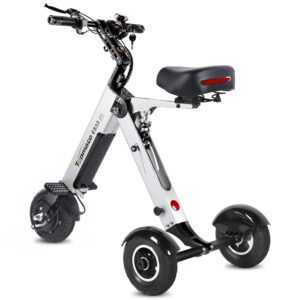
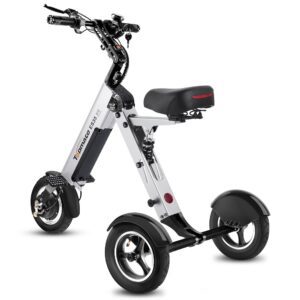
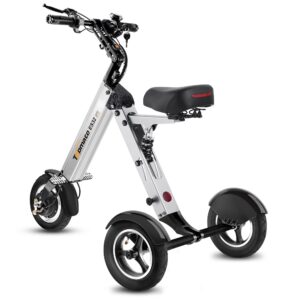
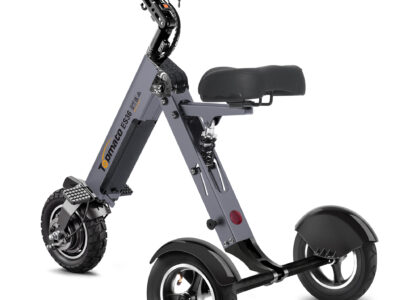
For example, the TopMate ES35 uses a 250W brushless motor, has a 100 kg/220.4 lb maximum load, and is rated for an 8° gradeability. The TopMate ES15 uses two 250W brushless motors (500W total), a 300 lb maximum capacity, and is rated for inclines up to 10°. These specifications illustrate why motor wattage should be evaluated alongside the complete drivetrain and manufacturer-rated gradeability rather than by itself.
What Does Mobility Scooter Motor Wattage Mean?
Mobility scooter wattage describes the electrical power associated with the motor system. A 250W motor and a 500W dual-motor system do not necessarily deliver twice the real-world climbing performance because other components determine how effectively that electrical power becomes useful wheel torque.
When comparing scooters, look for:
- Motor wattage: Indicates the motor system’s power rating.
- Torque: Describes rotational force available at the wheels.
- Gradeability: States the maximum incline the manufacturer has rated the scooter to climb.
- Battery voltage and capacity: Influence how much electrical energy is available.
- Load capacity: Shows the maximum permitted rider and cargo weight.
- Wheel and tire specifications: Affect traction and the ability to maintain contact with the surface.
For example, the ES35’s official manual specifies a 250W brushless hub motor, 13 N·m maximum output torque, and 8° gradeability. Its battery is a removable 36V 7.8Ah lithium battery, equivalent to approximately 281Wh.
Motor Power vs. Maximum Incline
The most useful specification for someone asking about mobility scooter hill climbing is usually the manufacturer’s maximum incline or gradeability, not wattage alone.
A scooter rated for 8° has been specified to handle a steeper incline than one rated for 5°, assuming comparable testing conditions. However, the rating should not be interpreted as a promise that the scooter will climb every 8° hill at full speed with a maximum-weight rider.
The ES33, for example, has a 250W brushless motor, 13 N·m maximum output torque, and an 8° gradeability rating.
The ES15 has a 500W dual-motor system, consisting of two independent 250W brushless motors, with 29 N·m of stated torque and a manufacturer-rated climbing capability of up to 10°.
This comparison demonstrates the important point: wattage can contribute to climbing ability, but the rated incline and torque provide additional information about how the system is designed to perform under load.
How Rider Weight Affects Climbing Performance
A mobility scooter does not only move the rider. The motor must move the rider, scooter, battery, accessories, and anything being carried.
As total weight increases, more force is required to climb the same slope. Consequently, a scooter operating close to its maximum weight capacity may:
- Accelerate more slowly uphill.
- Lose speed on steeper sections.
- Consume battery energy more quickly.
- Require more time to reach the top.
- Struggle more on loose or uneven surfaces.
Consider the ES35’s 220.4 lb/100 kg maximum load. A rider who is close to that limit, especially while carrying groceries or other items, should not expect identical hill performance to a much lighter rider.
Weight capacity is therefore not merely a safety specification. It is also relevant when evaluating mobility scooter motor power for hills.
Does Battery Charge Affect Hill Climbing?
Yes. A scooter with a partially depleted battery may not perform uphill exactly as it does with a fully charged battery.
Climbing requires sustained electrical output from the battery and motor. As battery voltage falls during use, the system may have less available electrical headroom, depending on its design and battery-management system.
This is why a scooter that normally handles a particular hill may feel slower toward the end of a long ride.
The ES15 uses a 36V 7.8Ah lithium-ion battery, while the ES35 uses a 36V 7.8Ah removable lithium battery. The ES35 specification corresponds to about 281Wh of stored energy.
Battery capacity should not, however, be confused with motor power. Watt-hours (Wh) describe stored energy; watts (W) describe power.
How Speed Affects Climbing Ability
Speed settings also matter.
When approaching a hill, maintaining a moderate speed can be more practical than trying to climb at the scooter’s maximum speed. A higher speed requires greater power demand, particularly when the scooter is already working against gravity.
For example, the ES15 provides three speed settings and can reach up to 15 mph, while the ES35 also offers three selectable speeds with a stated maximum of 15 mph.
For a steep section, riders should follow the manufacturer’s operating instructions and use an appropriate controlled speed rather than attempting to maintain maximum speed.
Tires, Tire Condition and Ground Surface Matter
Motor output cannot compensate indefinitely for poor traction.
A hill covered with:
- Wet leaves
- Loose gravel
- Mud
- Sand
- Snow or ice
- Uneven paving
can be considerably more difficult than a clean, dry paved incline with the same mathematical slope.
Tire condition also matters. Underinflated pneumatic tires can increase rolling resistance, while worn tread can reduce traction. Solid tires avoid inflation concerns but have different shock-absorption and traction characteristics.
The ES15 uses three 10-inch pneumatic tires, while the ES35 specification lists 10-inch wheels and the official manual specifies 10-inch front and rear wheels.
Larger wheels can help a scooter negotiate surface irregularities, but wheel size alone does not determine climbing capability.
Why Can a Scooter Struggle Even With a High-Wattage Motor?
Several factors can explain poor hill performance:
- The rider is near the maximum load.
- The battery is significantly discharged.
- The slope exceeds the manufacturer’s gradeability rating.
- The surface provides insufficient traction.
- The scooter approaches the hill too slowly or stops partway up.
- Tires are worn, damaged, or improperly inflated.
- The motor or controller has a mechanical or electrical problem.
- The hill is long enough to create sustained heat or power demand.
Therefore, searching only for a scooter with the highest wattage can lead to a misleading conclusion.
Real-World Examples
Gentle sidewalk slope
A mild, dry paved slope is generally less demanding than a steep driveway. A scooter operating well below its rated incline, with a suitable load and charged battery, should have a larger performance margin.
Driveway
Driveways can become surprisingly demanding because they may combine a relatively steep grade with a transition at the bottom or top. Approach carefully and remain within the scooter’s rated limits.
Mobility ramp
A ramp should be evaluated using its actual grade rather than simply describing it as “steep.” Check the ramp’s percentage or angle and compare it with the scooter manufacturer’s specification.
Steep road hill
A steep road should not be judged by motor wattage alone. If the slope approaches or exceeds the scooter’s rated gradeability, the safer decision is to avoid attempting it.
What Specifications Should Buyers Check for Hills?
If hills are part of your normal route, prioritize specifications in this order:
- Maximum incline/gradeability
- Motor torque and motor configuration
- Maximum rider/load capacity
- Battery voltage and capacity
- Tire type and size
- Maximum speed and available speed settings
- Ground clearance, where provided by the manufacturer
- Actual route conditions, including surface, hill length, and transitions
Do not fill missing specifications with assumptions. For example, if a manufacturer does not publish a ground-clearance figure, it is better to acknowledge that information is unavailable than estimate it from photographs.
Practical Decision Guide
Mostly flat sidewalks: Focus on maneuverability, comfort, battery capacity, and appropriate motor output.
Occasional gentle slopes: Check the manufacturer’s incline rating and make sure your normal rider-plus-cargo weight remains comfortably below the maximum capacity.
Regular moderate hills: Give greater attention to gradeability, torque, battery condition, tire traction, and load capacity rather than wattage alone.
Steep hills or frequent ramps: Measure the actual incline and compare it directly with the manufacturer’s maximum rating. A higher-wattage motor may help, but it does not override the scooter’s stated operating limits.
Where TopMate Specifications Fit
TopMate’s published specifications provide useful examples of how these numbers work together. The ES35 is specified with a 250W brushless motor, 13 N·m maximum output torque, 100 kg/220.4 lb load capacity, 36V 7.8Ah battery, 10-inch wheels, and 8° gradeability.
The ES15 uses two 250W motors, a 36V 7.8Ah battery, 300 lb maximum capacity, 10-inch pneumatic tires, and a stated maximum incline of 10°.
These figures should be treated as specifications rather than guarantees of identical performance on every hill. Rider weight, battery condition, temperature, traction, road surface, and slope length can all change real-world results.
Final Takeaway
Mobility scooter motor power matters for hill climbing, but wattage is only one part of the equation. The most useful evaluation combines motor power and torque with maximum incline, rider weight, battery condition, speed, tire characteristics, and surface conditions.
If hills are a regular part of your route, start with the manufacturer’s rated gradeability, then check whether the scooter’s load capacity, drivetrain, battery, and tires are appropriate for your actual riding conditions. This approach provides a much more realistic picture of hill-climbing capability than choosing a scooter based on wattage alone.
FAQ
Does higher wattage make a mobility scooter better at climbing hills?
Not always. Motor wattage is important, but hill-climbing performance also depends on torque, maximum incline rating, rider weight, battery charge, tires, traction, and surface conditions.
How does rider weight affect mobility scooter hill climbing?
A heavier combined load requires more force to climb the same slope. Riders near the scooter’s maximum weight capacity may experience slower speeds and greater battery consumption on hills.
What is the difference between incline percentage and degrees?
They measure slope differently. For example, an 8° incline is approximately a 14% grade, while a 10° incline is approximately a 17.6% grade. Always check which measurement a scooter manufacturer uses.
What specifications should I check when buying a mobility scooter for hills?
Check the manufacturer’s maximum incline or gradeability first, followed by motor power and torque, weight capacity, battery specifications, tire type and size, speed settings, and ground clearance where available.

-scaled-2-420x300.jpg)