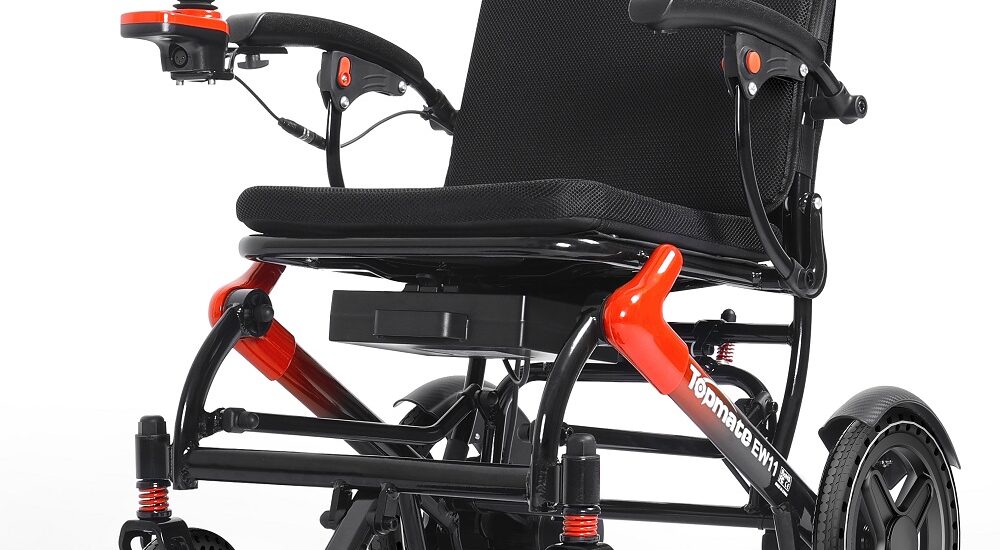
Choosing an electric wheelchair for both indoor and outdoor use is less about finding the model with the largest range or highest motor power and more about matching specifications to the places you actually use it.
A wheelchair that works well in a bedroom and narrow hallway may not provide enough ground clearance for uneven sidewalks. Conversely, a model designed primarily for outdoor travel may be too wide for a bathroom doorway or difficult to turn around in a small kitchen.
The most important factors are overall width, turning radius, weight, weight capacity, folded dimensions, battery range, wheel size, ground clearance, speed, and surface capability.
What Is an Electric Wheelchair?
An electric wheelchair, also called a power wheelchair, uses one or more electric motors and a rechargeable battery to propel the chair. The user normally controls direction and speed with a joystick or another electronic control.
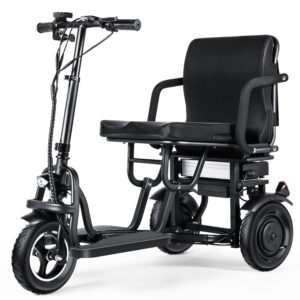
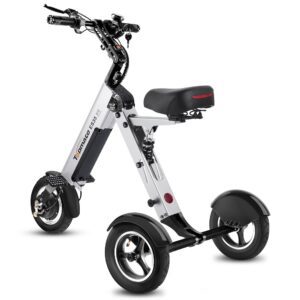
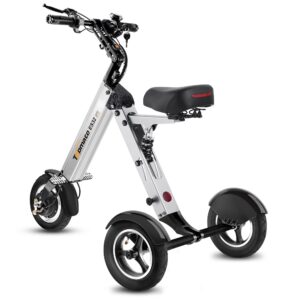
Unlike a mobility scooter, an electric wheelchair is designed around a seated wheelchair-style position and typically uses a joystick control. Mobility scooters generally have a tiller and a forward-facing seat.
The two categories can overlap in intended use, but they should not be treated as interchangeable. A wheelchair may provide a tighter turning circle and a more compact seated driving position, while a scooter may offer different advantages for outdoor travel and storage.
User Type 1: Primarily Indoor User
Imagine someone who mainly travels between the bedroom, bathroom, kitchen, and living room.
For this user, maneuverability usually matters more than maximum range.
Main needs
- Narrow overall width
- Small turning radius
- Predictable controls
- Appropriate seat dimensions
- Easy movement around furniture
- Suitable floor clearance
Specifications to prioritize
Width is critical. If a doorway is 30 inches wide, choosing a wheelchair that is 29.5 inches wide leaves very little practical clearance for steering through the opening.
Measure the actual doorway at its narrowest point rather than relying on a standard doorway assumption.
A smaller turning radius is equally important. In a kitchen, for example, a wheelchair may need to turn between cabinets, appliances, and a dining table.
Potential limitations
An extremely compact indoor wheelchair may have smaller wheels, less ground clearance, or a shorter range. Those compromises can become noticeable outdoors.
What to avoid
Avoid selecting a wheelchair solely because it has a high battery range if its dimensions make normal movement around the home difficult.
User Type 2: Indoor + Neighborhood User
Consider an apartment resident who uses the wheelchair indoors but also travels along sidewalks, driveways, and nearby streets or paths.
This is where the specification balance becomes more complicated.
Priorities
The wheelchair should remain compact enough for the home while offering enough outdoor capability for the user’s regular routes.
Pay attention to:
- Width
- Turning radius
- Wheel diameter
- Ground clearance
- Tire construction
- Battery range
- Maximum speed
- Weight capacity
For example, a chair with a 24-inch overall width may be much easier to use indoors than a 28-inch model, but the smaller design may have less clearance underneath.
Driveway transitions are another consideration. A chair may handle a smooth sidewalk but struggle when a driveway creates a sharp change in elevation. choose electric wheelchair
What to avoid
Do not assume that “outdoor” means suitable for every outdoor surface. Gravel, grass, potholes, steep ramps, and wet surfaces can require capabilities beyond those needed for ordinary paved sidewalks.
User Type 3: Frequent Outdoor User
Now consider someone who regularly travels several miles for shopping, appointments, community activities, or outdoor recreation.
Range becomes much more important.
How much range is enough?
There is no universal mileage requirement.
Suppose a user normally travels:
- 2 miles to a destination
- 2 miles back home
- 1 mile of additional movement during the trip
That is a 5-mile trip.
A wheelchair advertised with a 5-mile maximum range would leave essentially no reserve under ideal assumptions.
A better approach is to allow a substantial margin because real-world range can be affected by:
- Rider weight
- Hills
- Surface conditions
- Stop-and-go driving
- Temperature
- Tire pressure
- Battery age
- Speed
- Frequent acceleration
Battery range should therefore be treated as a rated test figure rather than a guaranteed daily distance.
Outdoor specifications to prioritize
Look at:
Ground clearance: Helps reduce the risk of contacting small surface irregularities.
Wheel size: Larger wheels can generally roll over certain surface changes more easily.
Tire construction: Pneumatic tires may provide additional cushioning, while solid tires eliminate puncture concerns.
Motor power: Motor output can influence acceleration and climbing performance, but wattage alone does not determine hill capability.
Maximum incline: Check the manufacturer’s stated climbing capability instead of estimating it from motor power.
User Type 4: Frequent Transportation User
A wheelchair can be excellent on the road and still be impractical if it is difficult to transport.
Imagine someone who loads the wheelchair into a vehicle several times each week.
Main needs
- Manageable total weight
- Compact folded dimensions
- Removable battery where available
- Simple folding or disassembly
- Suitable vehicle storage dimensions
- Secure loading points where specified
Why wheelchair weight matters
Suppose a wheelchair weighs 65 lb without its battery, while the battery weighs another 8 lb.
The transport weight becomes:
65 + 8 = 73 lb
That 73-lb figure is more useful for vehicle-loading decisions than the 65-lb chassis figure.
Also consider whether the heaviest component can actually be handled safely by the person doing the loading.
Folded dimensions matter just as much
For vehicle storage, record:
- Folded length
- Folded width
- Folded height
- Weight with and without battery
A wheelchair that technically fits inside a vehicle may still be difficult to load if the cargo opening is narrow or the folded chair has to be rotated during loading.
User Type 5: Caregiver Who Regularly Loads or Stores the Wheelchair
Caregivers often need to consider factors that the primary user may not notice.
A chair weighing 80 lb may be manageable with a powered lift but difficult to lift manually. A lighter chair may be easier to handle but potentially involve compromises in outdoor capability, seating dimensions, or battery capacity.
Prioritize
- Actual transport weight
- Heaviest removable component
- Folding mechanism
- Battery removal
- Storage footprint
- Lift or ramp requirements
- Tie-down requirements
- Vehicle cargo space
Never choose transportation equipment based only on the wheelchair’s advertised “lightweight” description. Use the manufacturer’s actual weight figures.
Indoor vs. Outdoor: How Priorities Change
| Specification | Indoor use | Outdoor use |
|---|---|---|
| Overall width | Very important | Important |
| Turning radius | Very important | Important |
| Wheel size | Moderate | Important |
| Ground clearance | Moderate | Important |
| Battery range | Moderate | Very important |
| Tire design | Important for flooring | Very important |
| Maximum speed | Usually secondary | More relevant |
| Incline capability | Usually secondary | Important |
| Folded dimensions | Important for storage | Important for transport |
| Weight | Important for transport | Important for stability and loading |
No single number determines suitability.
Can an Electric Wheelchair Fit Through a Standard Doorway?
It depends on the actual doorway and wheelchair width.
Do not assume that a “standard doorway” has one universal measurement across the USA, Canada, UK, and Australia.
Measure the clear opening, not the nominal door size.
For example:
Clear doorway: 30 inches
Wheelchair width: 26 inches
Nominal clearance: 4 inches
That sounds workable, but the user still needs enough room to approach and steer through the opening without hitting the frame.
For bathrooms and narrow hallways, measure the tightest points of the route rather than just the main entrance.
What Turning Radius Is Useful Indoors?
Turning radius describes how much space the wheelchair requires to change direction.
A smaller turning radius can make it easier to:
- Turn beside a bed
- Position near a toilet
- Navigate kitchen counters
- Reverse from a hallway
- Maneuver around furniture
However, turning radius should not be evaluated independently from wheelchair width and length.
A chair might have a compact turning circle but still be difficult to position in a narrow room if its overall footprint is large.
How Much Does an Electric Wheelchair Weigh?
Electric wheelchairs vary considerably in weight.
Portable folding models may weigh roughly 40–70 lb, while larger powered wheelchairs can weigh well over 100 lb. The exact figure depends on frame construction, motors, battery, seating system, suspension, and accessories.
For transportation, ask three questions:
- What is the published chair weight?
- Does that weight include the battery?
- What is the weight of the heaviest removable component?
These numbers provide a much more realistic picture of portability.
How Wide Should an Electric Wheelchair Be?
There is no single ideal width.
For indoor users, measure the narrowest doorway and hallway first. Then compare those measurements with the wheelchair’s maximum external width, including components that remain attached during normal use.
A wheelchair that is only 1 inch narrower than a doorway may still be difficult to maneuver through it comfortably.
For apartment living, also measure elevator doors, bathroom entrances, kitchen passages, and storage areas.
How Far Can an Electric Wheelchair Travel?
Manufacturer-rated range can vary substantially between models.
Instead of choosing a range figure based on an occasional long trip, calculate your normal daily requirement.
For example:
Daily route: 4 miles
Additional errands: 2 miles
Expected total: 6 miles
A user should not plan to operate continuously at the published maximum range. Battery performance can decrease with hills, heavier loads, cold temperatures, aging batteries, and frequent acceleration.
For frequent outdoor users, having a meaningful range reserve is more practical than choosing a wheelchair whose advertised range barely covers the normal route.
What Should You Consider for Outdoor Use?
Outdoor users should inspect more than battery specifications.
Check:
- Ground clearance
- Wheel diameter
- Tire type
- Suspension, if fitted
- Weight capacity
- Maximum incline
- Braking system
- Weather limitations
- Manufacturer-approved surfaces
A sidewalk route may include cracked pavement, curb ramps, driveway transitions, gravel sections, or slopes.
Before buying, think through the entire route rather than only the destination.
A Practical Final Decision Framework
The right electric wheelchair depends on the user’s environment.
Primarily indoors: prioritize compact width, turning radius, controls, and doorway clearance.
Indoors plus local sidewalks: balance maneuverability with wheel size, ground clearance, tires, and moderate range.
Frequent outdoor user: place greater emphasis on battery range, ground clearance, wheel design, stability, incline capability, and surface suitability.
Frequent vehicle traveler: prioritize folded dimensions, transport weight, removable components, and vehicle-loading requirements.
Caregiver-dependent transportation: focus on the actual lifting weight, heaviest component, folding mechanism, storage footprint, and available vehicle equipment.
The goal is not to maximize every specification. It is to choose specifications that solve the user’s actual mobility problems without creating new limitations at home or during transportation.
Which Type Fits Your Needs?
- Small home + narrow doorways: choose a compact wheelchair with a small turning radius and width appropriate for the measured route.
- Home + neighborhood travel: balance indoor maneuverability with outdoor tires, clearance, and sufficient range.
- Frequent outdoor travel: prioritize range, wheel design, ground clearance, stability, and manufacturer-rated surface capability.
- Frequent car travel: focus on folded dimensions and actual transport weight.
- Caregiver loading: pay particular attention to battery weight, removable components, folding mechanism, and lift/ramp requirements.
Before purchasing, measure the home, route, vehicle, and user. choose electric wheelchair Those measurements often tell you more about suitability than a single headline specification.
FAQ
What electric wheelchair is best for indoor use?
An indoor electric wheelchair should have a compact width, small turning radius, manageable length, and controls that are easy to operate in confined spaces. Measure doorways and hallways before choosing a model.
Can an electric wheelchair be used both indoors and outdoors?
Yes. Many electric wheelchairs support both environments, but outdoor suitability depends on specifications such as wheel size, ground clearance, tire construction, battery range, incline capability, and manufacturer surface recommendations.
How do I choose an electric wheelchair for indoor and outdoor use?
Measure your narrowest indoor spaces first, then consider outdoor travel distance, surfaces, slopes, and transportation needs. Balance width and maneuverability with range, ground clearance, wheel design, weight capacity, and portability.
What is the difference between an electric wheelchair and a mobility scooter?
An electric wheelchair is typically controlled with a joystick and uses a wheelchair-style seating configuration. A mobility scooter generally has a tiller and scooter-style seat. The appropriate option depends on the user’s mobility requirements, environment, control needs, and transportation plans.


-scaled-2-420x300.jpg)